
The aluminium mesh door has become a must-have part of any house as well as commercial space, as they offer protection from insects and dust and allow free movement of air and light at the same time. Unlike the ordinary doors, the mesh door goes along with your existing door or opening in your house, giving you an opportunity to provide ventilation while ensuring safety and hygiene at the same time. Have you ever thought about how these doors are made from aluminium sections into a finished insect proof door? In the following guide, we will discuss the whole process in detail.
If you are an architect or a construction company looking for materials to use for your projects, then you should be familiar with the production process of the aluminium mesh doors.
Why Aluminium Mesh Doors Are So Popular
The choice of aluminium mesh doors over regular net curtains or temporary insect screens is based on the fact that the former are much more durable, secure, and require little maintenance. The first advantage is that aluminium does not corrode, is very light weight, and is strong enough to stretch out mesh without stretching itself. In addition, aluminium meshes fit into the existing aesthetic of the rest of the house, including the aluminium mesh windows.
This type of door is particularly popular in kitchen areas, balconies, verandas, and doors that have to remain open for ventilation purposes but should be protected from insects and dust.
Step 1: Site Measurement and Design Planning
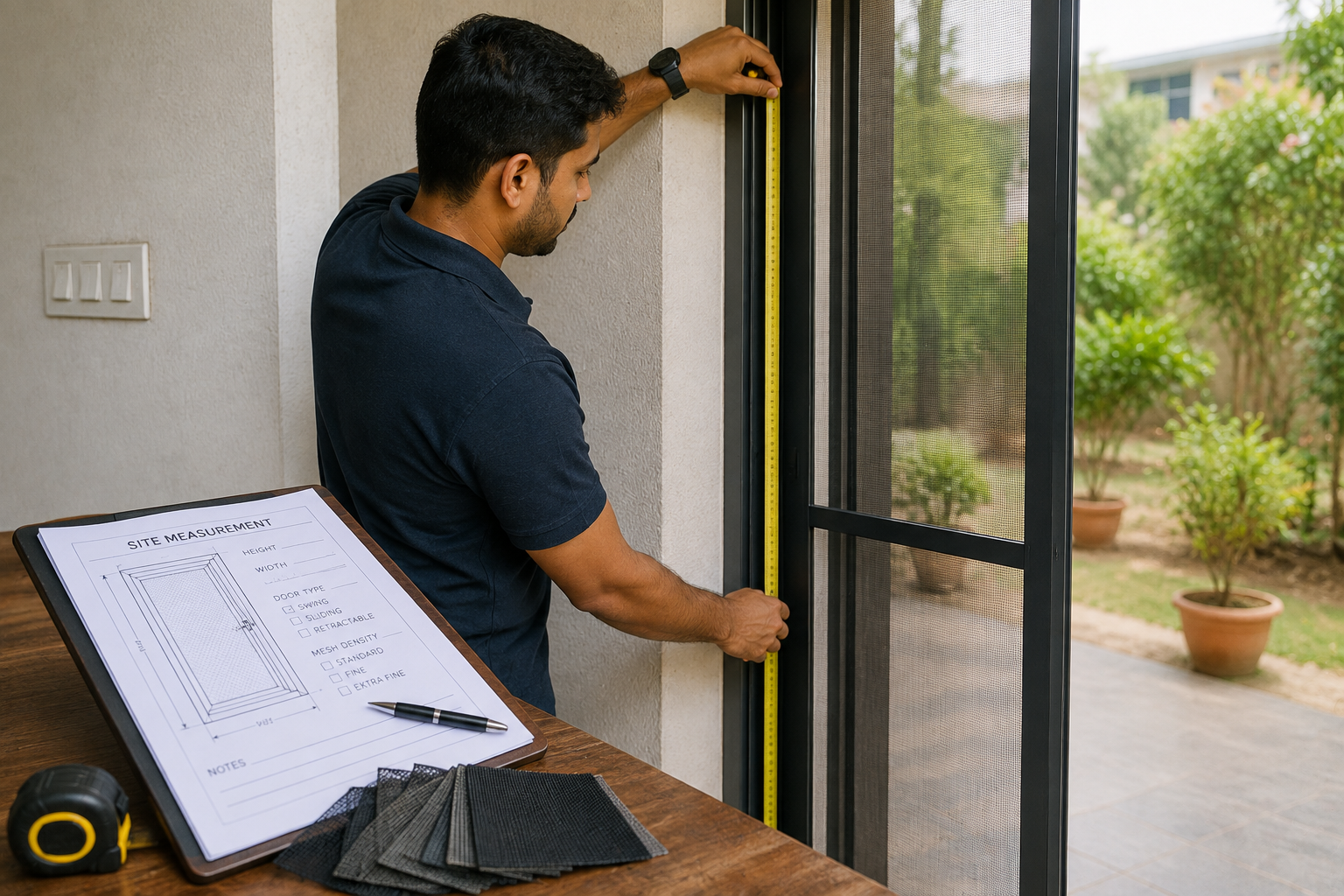
Step one of the manufacturing process involves measuring the door opening. In this step, the manufacturer measures the height and width of the door opening and determines whether the mesh door is to be manufactured as a swing door, sliding door, or retractable door. At this stage, other decisions are also taken with regard to mesh density, frame color, and whether it is to be installed as a stand-alone door or together with aluminum single door.
It is important to measure the door accurately at this stage, because even a slight gap between the mesh door and frame would allow insects to enter.
Step 2: Selecting the Aluminium Profile
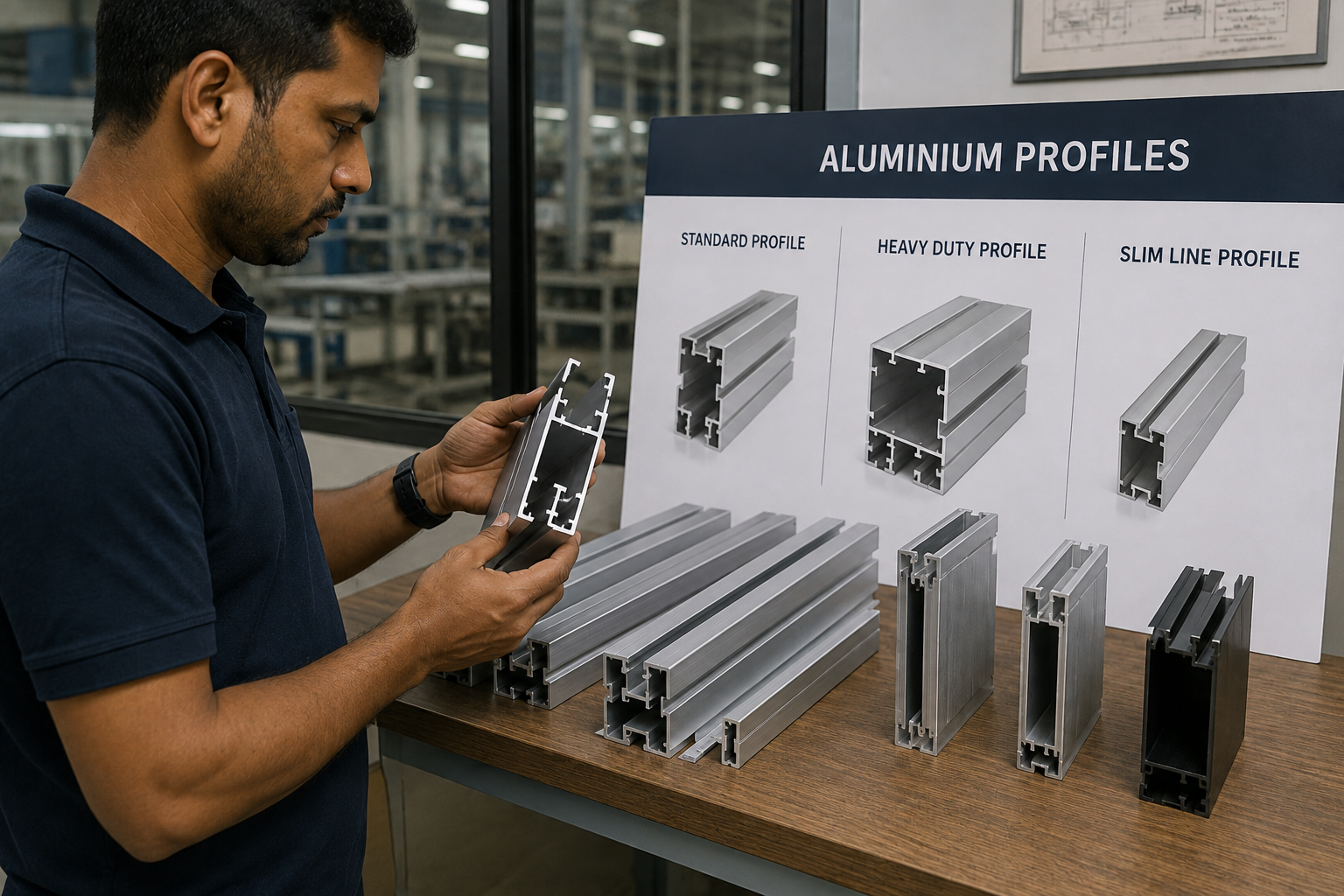
After deciding on the right measurements, the correct aluminum profile is then chosen. Usually, mesh door frames are made from lightweight but strong profiles because the frame should be able to tighten up the mesh while not making the opening heavier than needed. The commonly used profiles are:
- Standard mesh door profiles – for doors used at home and on balconies
- Heavy duty profiles – for large openings or heavy traffic commercial doorways
- Slim line profiles – for a sleeker look
This process involves the Aluminium Windows range of products because mesh systems for doors and windows share the same technology in the profiles.
Step 3: Cutting the Aluminium Sections
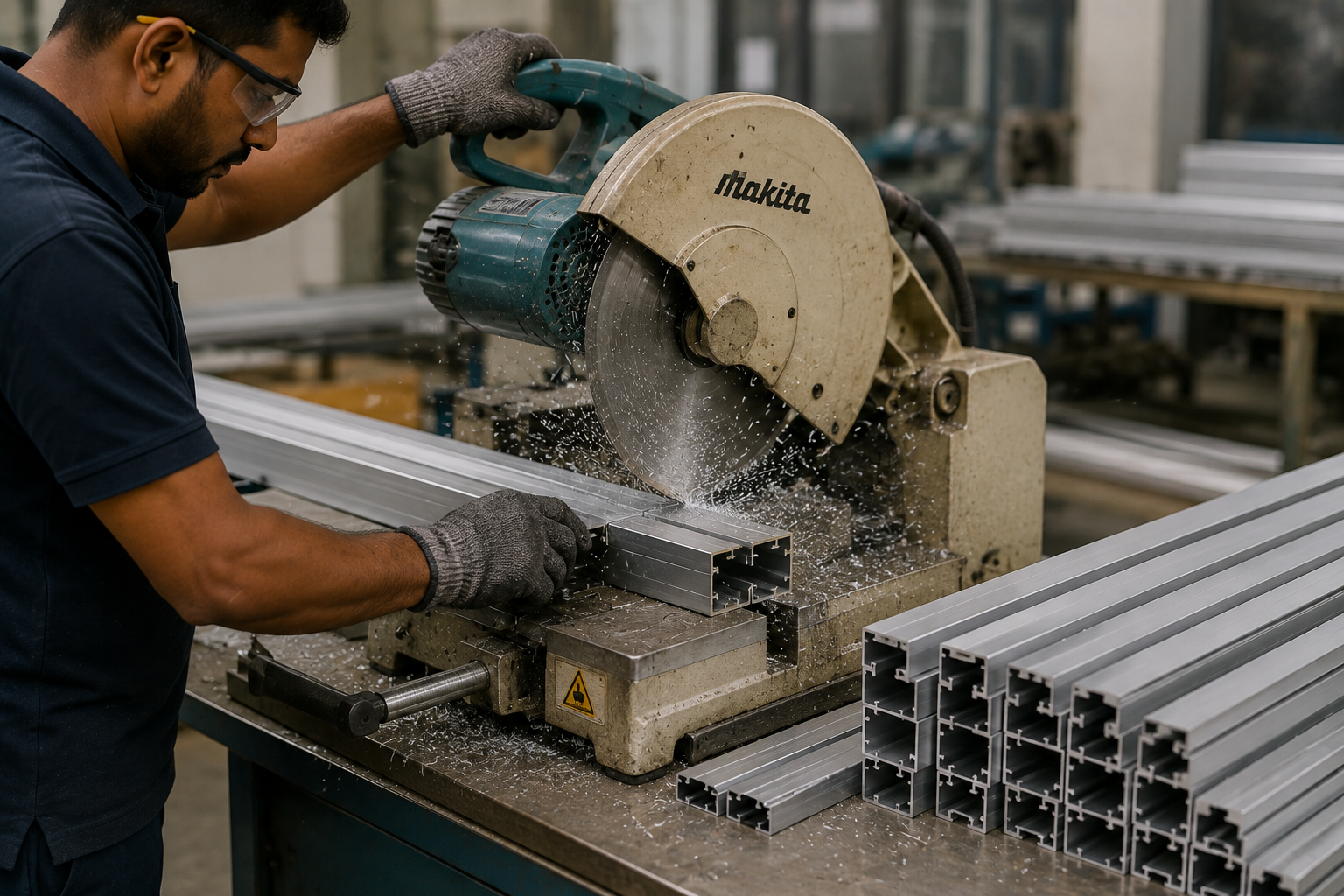
Once the profile is finalized, aluminum extrusion is cut to precise lengths that match the dimensions of the door frame using cutting machines. The top rail, bottom rail, and two side rails are all cut in accordance with the finalized dimensions. As mesh doors depend on having a square door frame to maintain the tightness of the mesh, accuracy in cutting is paramount in this process.
Step 4: Machining and Frame Joinery
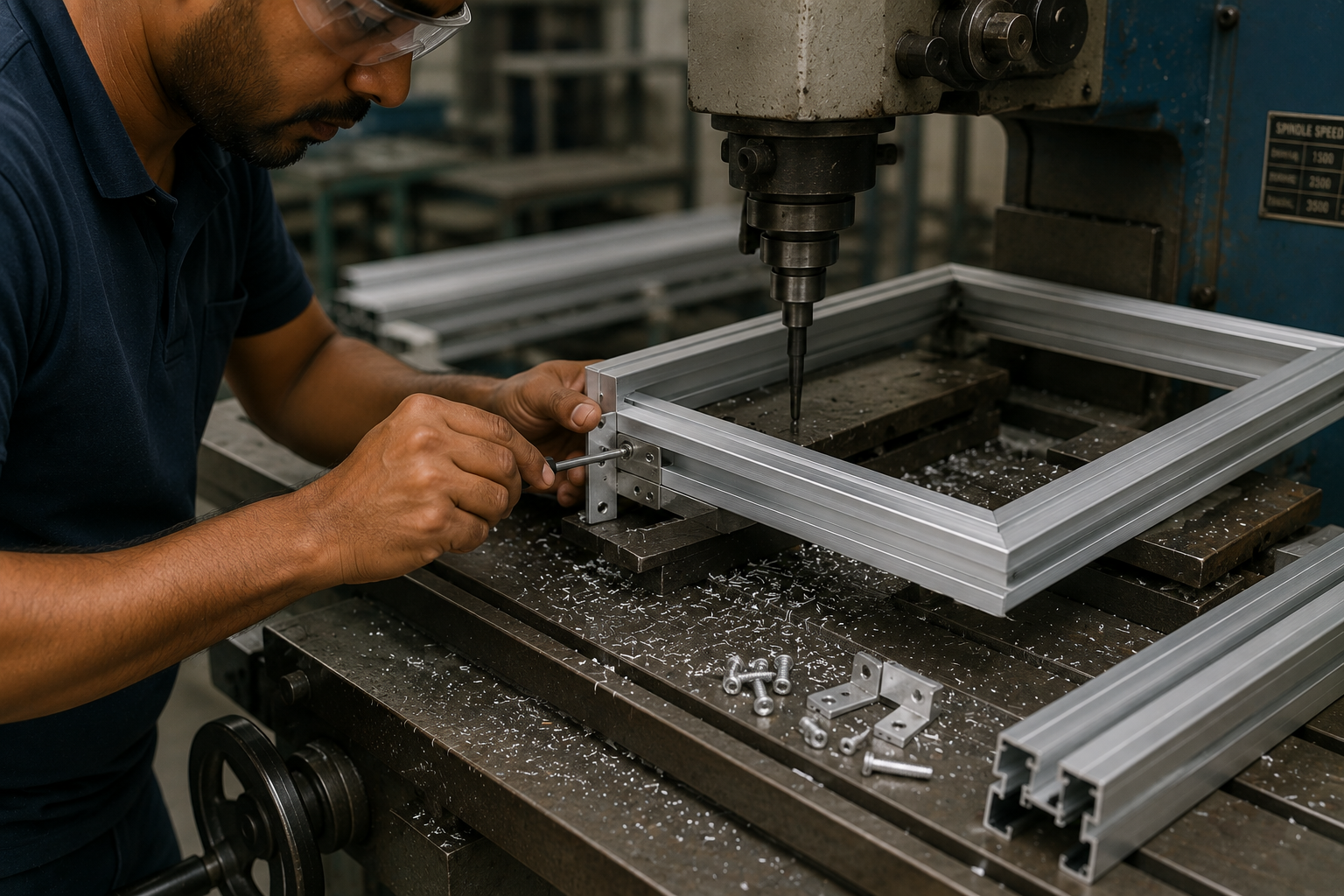
Once the cut, the aluminium pieces are machined, that is, notched, drilled and corner joints prepared. The corners of the frame are strengthened with the help of aluminium or nylon cleats and screws so that the frame remains stiff and square. It is very important that the frame should be properly assembled, especially in case of mesh doors, otherwise the mesh door tends to sag down or get wrinkled.
Step 5: Fitting the Mesh
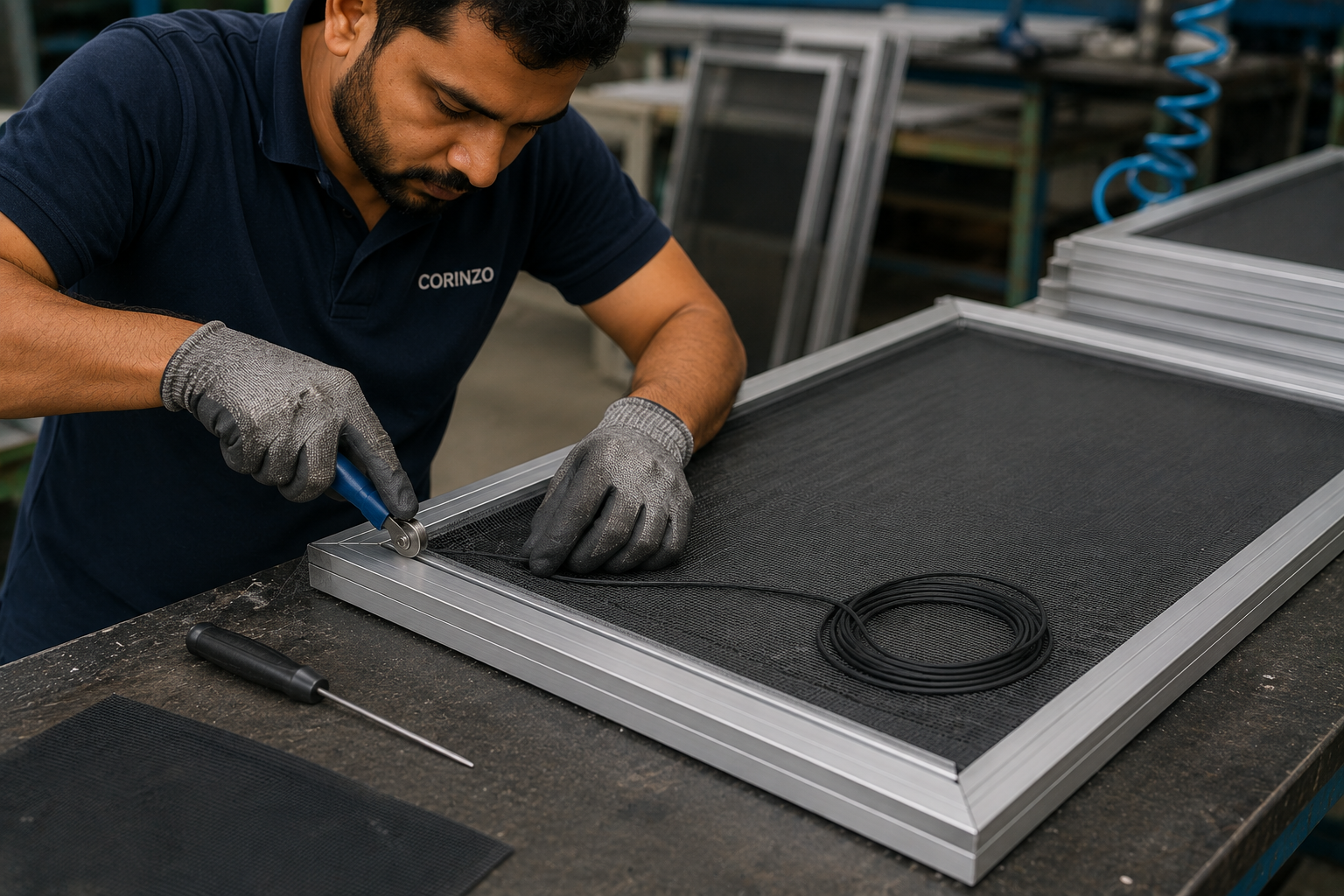
This is where the definition of the mesh door comes. The mesh, which is made up of fibreglass, aluminium wire, or stainless steel based on the requirements, is tightly fitted on the framework and held by a spline (a flexible cord) that fits into the groove running around the framework. The mesh must be evened out on all sides in order to prevent any sags, bubbles, and slack.
The choice of stainless steel mesh is for more security, and that of the fibreglass mesh is because of its economical nature.
Step 6: Fitting Hardware
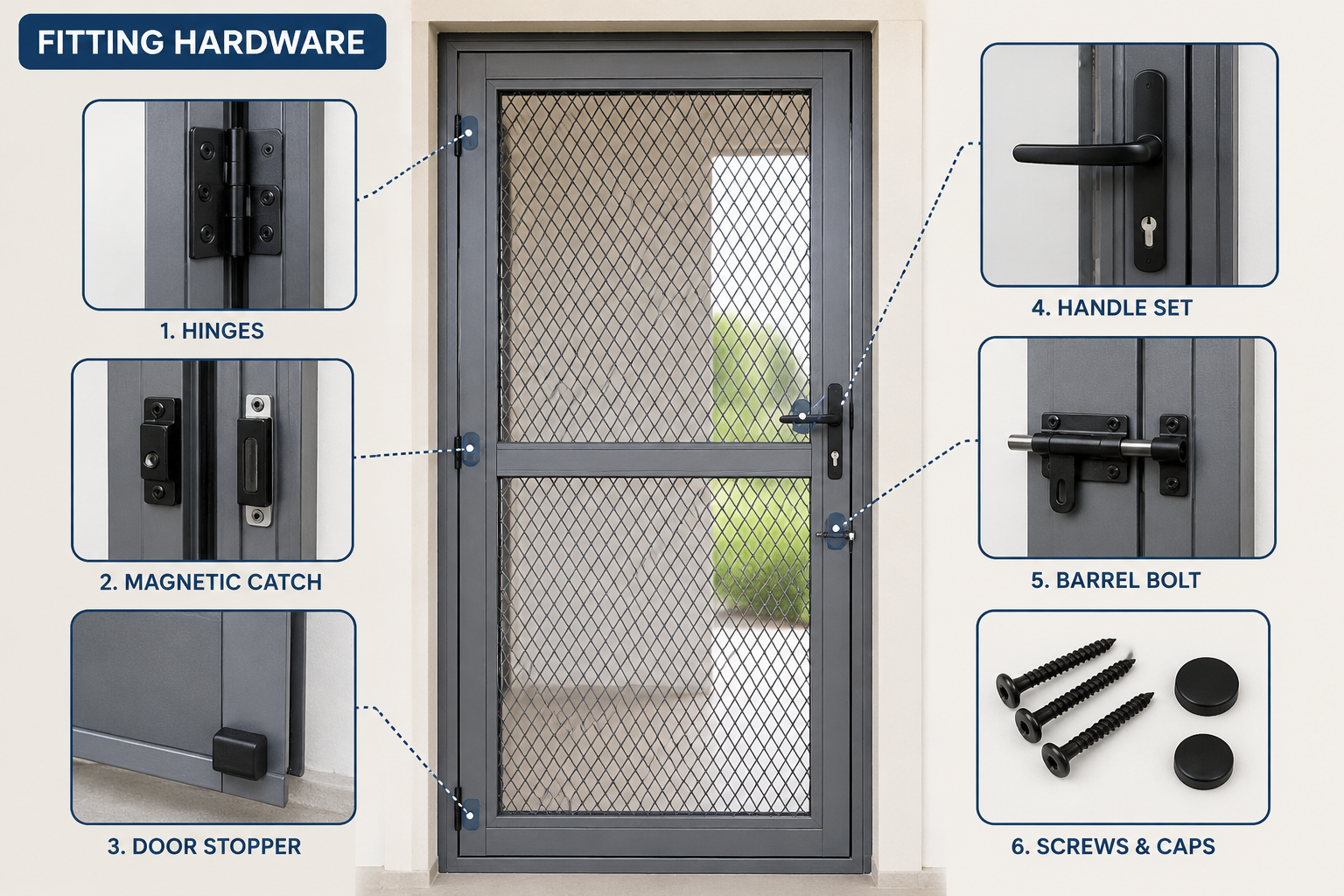
The next step involves fitting the hardware based on the kind of door being installed. In swing mesh doors, hardware such as hinges, self-closing springs or a door closer, and latches or locks are installed. Rollers and a track system are installed in case of sliding mesh doors, just like that of aluminum sliding doors. Handles, catches, and weather stripping are also installed at this point.
Hardware plays a critical role in determining whether a mesh door will close and seal effectively, or it will rattle and create gaps through which insects can get in.
Step 7: Sealing and Weatherproofing
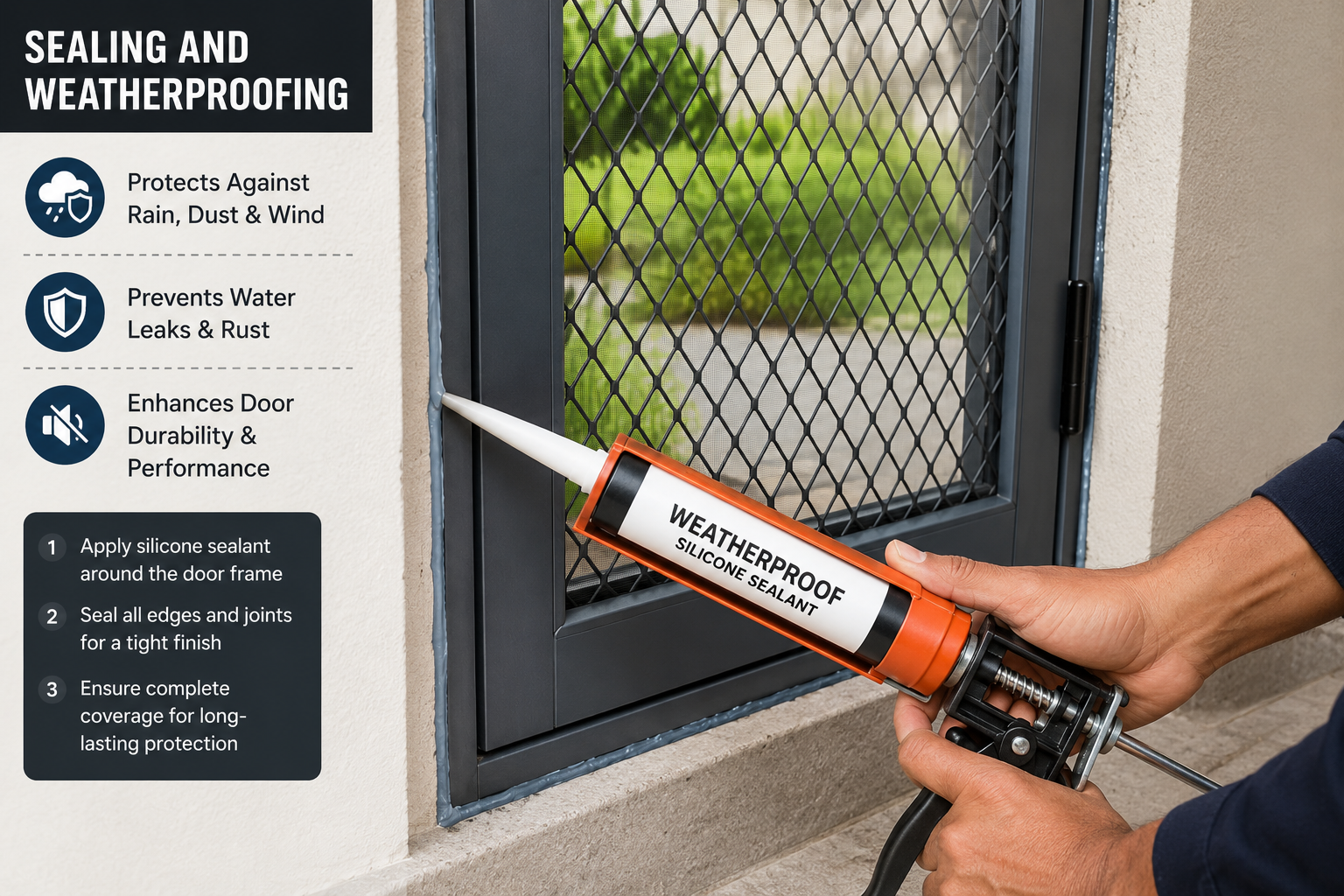
These brushes seals and rubber gasket seals are placed at the joints of the frame in order to seal any small spaces left between the mesh door and the actual door or window frame. This is especially true in the case of the mesh door since its whole purpose is sealing.
Step 8: Quality Check and Finishing
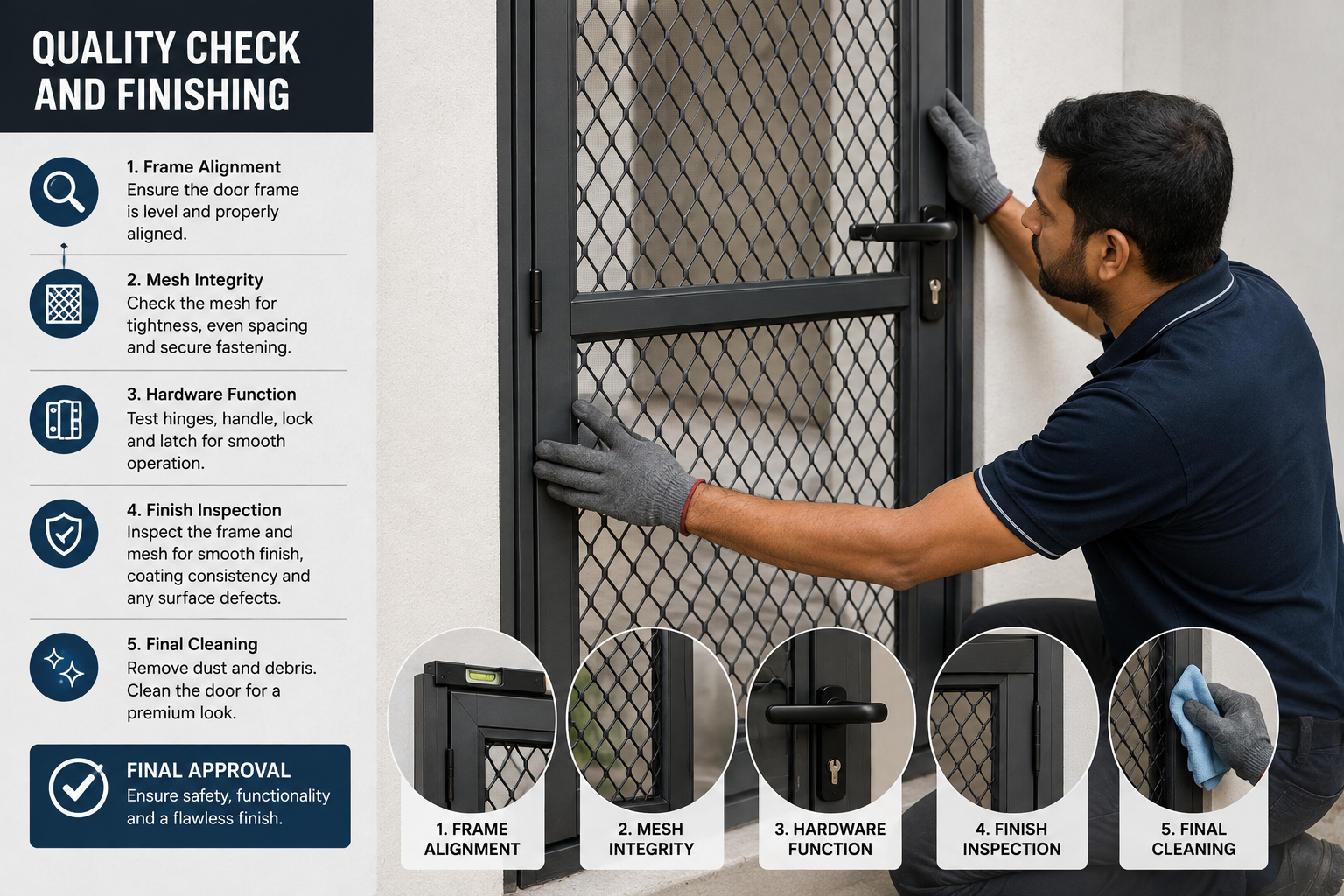
Prior to the delivery or installation of the mesh door, it will be carefully inspected with regards to its quality. This involves looking into the tightness and uniformity of the mesh, the ease of movement of the hinges or roller mechanism, proper locking or latching system, and the square and undistorted state of the frame. The aluminum coating, which is typically powder coated or anodized, is likewise carefully looked into.
Step 9: Installation
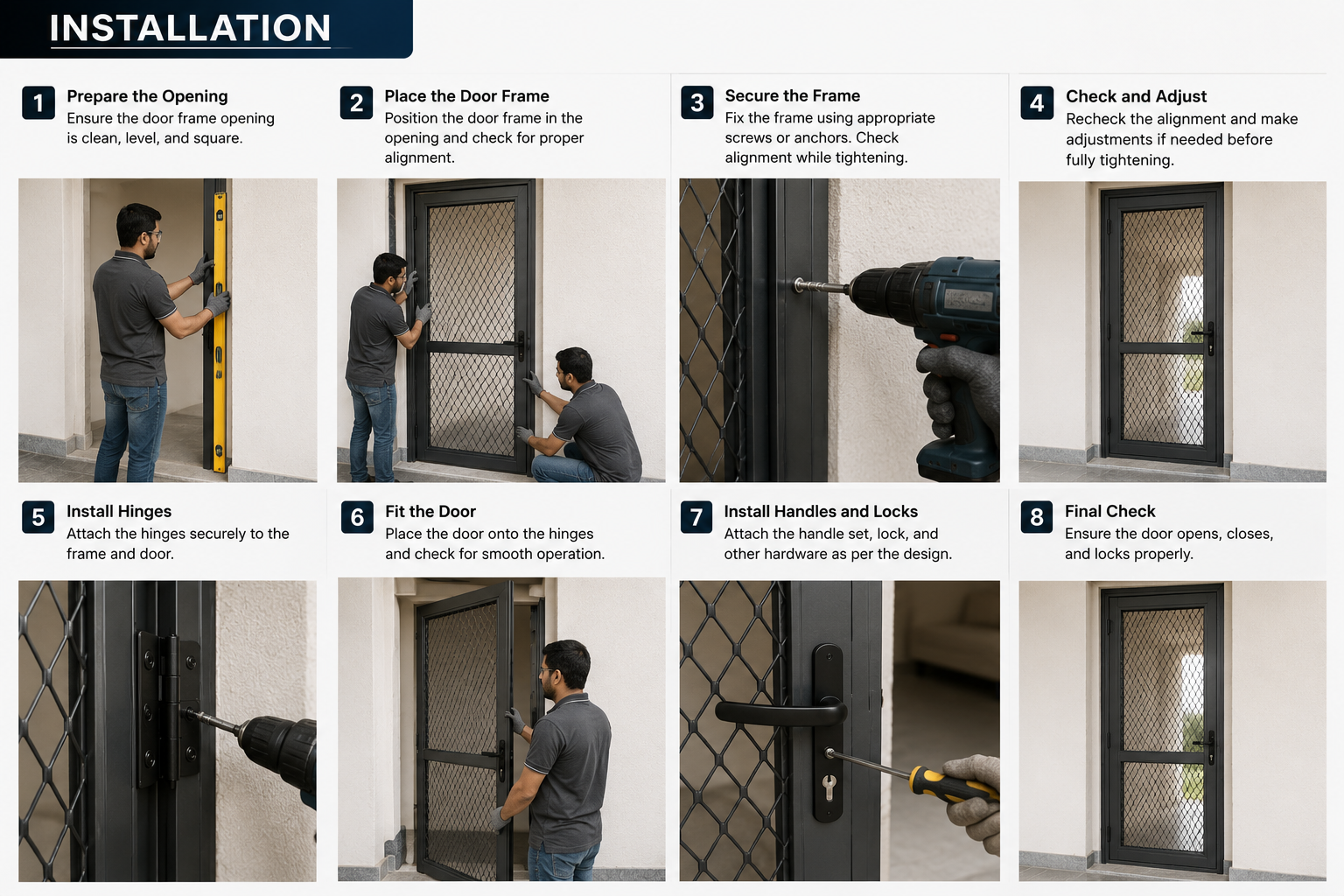
Installation of the mesh door forms the last phase of the project. The frame is installed in the door or window opening and checked to be level and straight such that it will close without any gaps. In the case of swing doors, the tension of the closer is checked to see whether it will close automatically; in sliding doors, the alignment of the track and rolling of the door is checked.
In case of several installations at once, it would be important to consider the full range of aluminium doors and mesh doors. Those who are interested in building frames can consult How to Build an Aluminium Door Frame.
Choosing the Right Manufacturer
Although mesh doors are basic in appearance, they depend very much on the quality of frame, mesh, and hardware used. It is recommended to search for a manufacturer having an experienced factory that possesses adequate supplies of quality mesh and has experience in building various types of buildings both residential and commercial. Checking out a whole line of products of a manufacturer can help to evaluate his expertise.
Aluminium mesh doors require precision, which is why the processes of accurate measurements, proper choice of profiles, good framing assembly and appropriate mesh tensioning are all crucial parts of their creation. In addition, each one of the above mentioned steps affects the quality of the door itself, helping it effectively repel insects and provide fresh air access. For everyone from home owners to contractors, knowledge about this process will help to better assess its quality.
Frequently Asked Questions
1.What time does it take to manufacture an aluminium mesh door?
It takes different time periods depending on how big the door is, the type of mesh used and number of orders but usually a standard mesh door takes a couple of days to make.
2.What kind of mesh should I use for my aluminium mesh door?
Fiberglass mesh is relatively cheap and will give enough protection from insects. The stainless steel mesh is durable and has added security features compared to fiberglass.
3.Can an aluminium mesh door be fixed to an existing door/window?
Yes, aluminium mesh doors are normally made especially for your existing door or window giving you the option to protect without changing the existing door.
4.Do aluminium mesh doors have both swinging and sliding options?
Yes, there are both swinging and sliding aluminium mesh doors.
5.How durable are the aluminium mesh doors?
They are indeed very durable and they do not rust as well. They are designed to last long if installed properly.
6.Do aluminium mesh doors require lots of maintenance?
No, the maintenance is minimal and all that is required is to clean the mesh and the frame occasionally.
7.Where can I purchase aluminium mesh door that is made in India?
Aluminium mesh doors and windows are produced by us in our manufacturing plant located in Surat, Gujarat. For more information on the products, please click here.
Related Post :
How to Make Aluminium Folding Doors