
Aluminium door frames have become very popular in all parts of India in houses, offices and even in commercial buildings owing to their durability, design and easy maintenance. In case you are a manufacturer who requires knowing the way aluminium door frames are manufactured or a buyer who wishes to know about the manufacture of the aluminium doors which you might purchase, this guide would be helpful to you.
This guide covers all aspects of manufacturing aluminium door frames.
What You’ll Need
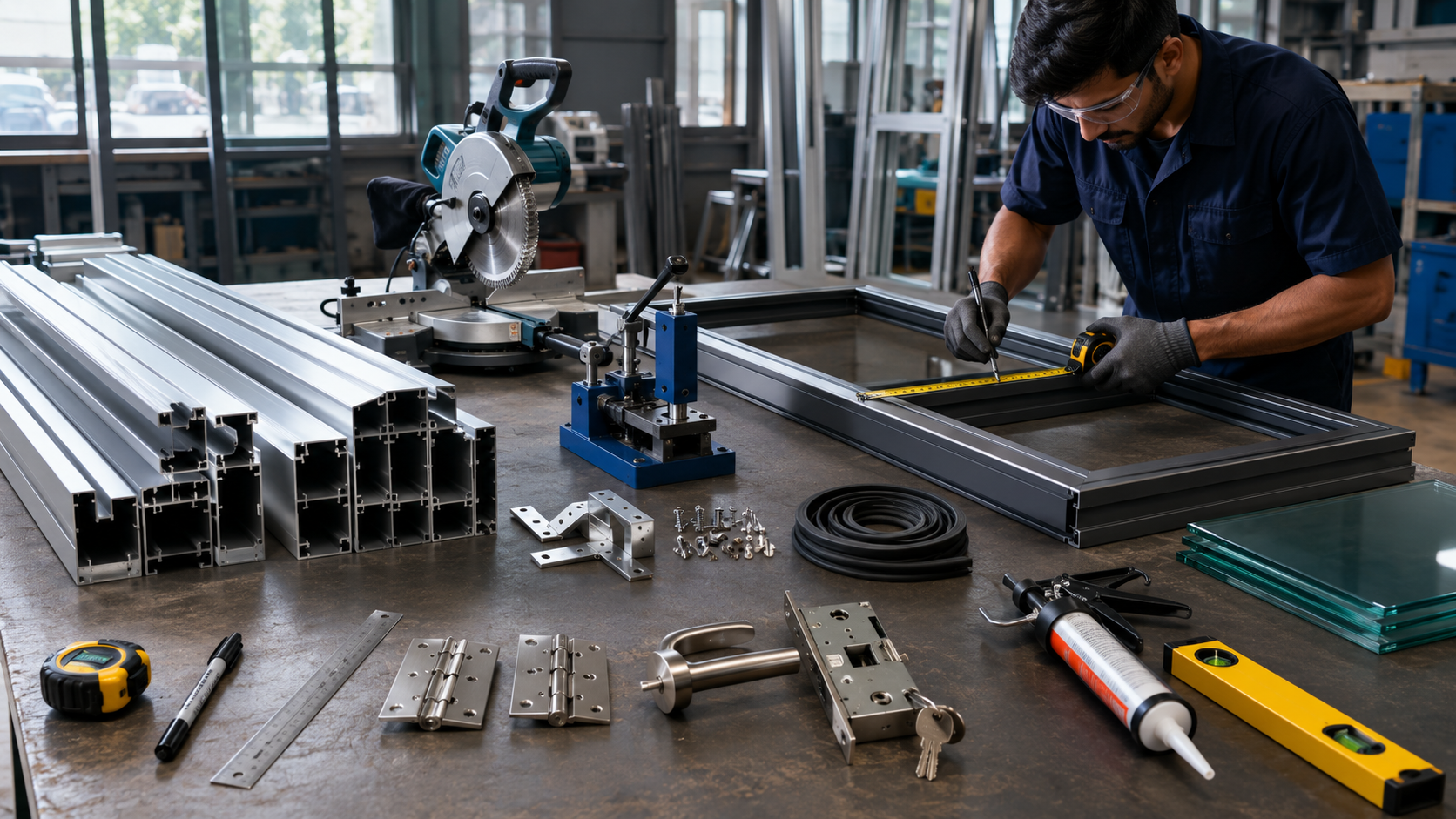
Before starting, you’ll need the following materials and tools:
- Aluminium extrusions for door frames
- Measuring tape and marker pen
- Mitre saw or aluminium cutter
- Corner crimping machine or corner braces
- Screws or rivets
- Rubber gasket or weather strip
- Panes of glass (depending on design of door)
- Door hinges, door handle, and door lock
- Silicone sealant
- Spirit level
Step-by-Step Process to Make an Aluminium Door Frame
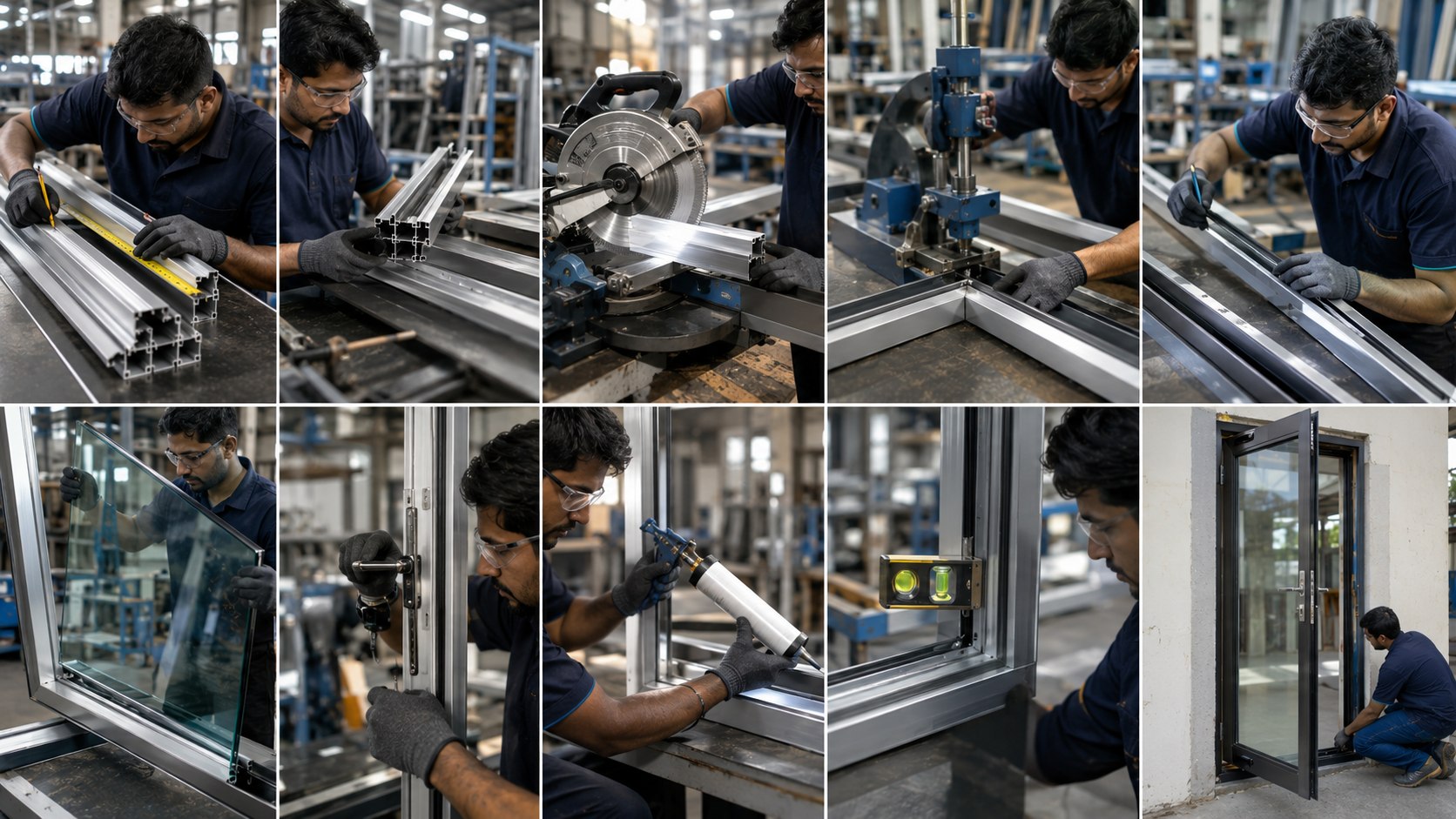
Step 1: Take Accurate Measurements
The first stage is to measure the frame of the door accurately. It is essential to do this since any small mistakes would influence the appearance and functionality of the door when it is installed. You should always take your measurements from different angles in the frame of the door.
Step 2: Select the Right Aluminium Profile
Choose the aluminium section based on the type of door you’re building — whether it’s a sliding door, casement door, or French door. Each door type uses a slightly different profile designed for its opening mechanism, glass thickness, and load requirements. For premium finishes, you can also consider a wooden aluminium door profile, which gives a timber-like appearance with aluminium’s strength.
Step 3: Cut the Profiles to Size
The cutting of the profiles must be done by means of mitre saw or an aluminum cutting machine depending on the measurements obtained. Cutting of the corners of the frame should be done at an angle of 45 degrees. Accurate cuts are crucial during this stage.
Step 4: Join the Frame Corners
After the cutting, the parts of the frame are then fixed together on the corners either through crimping, corner plates, or screws depending on the way the frame is constructed. Crimping involves the mechanical fixing of the aluminum corners using specialized equipment.
Step 5: Reinforce the Frame (If Required)
For larger doors or those supporting heavy glass panels, galvanized steel reinforcement may be inserted inside the aluminium profile to add extra strength and prevent sagging over time. This step is especially important for sliding doors and large patio doors.
Step 6: Fit the Rubber Gaskets and Seals
Rubber gasket strips are inserted into the grooves of the frame to ensure that the glass remains tightly held and waterproof. It is through such sealing that there can be no leakage of any water, dust, or air from inside.
Step 7: Install the Glass Panel
It does not matter if the glass is clear, tinted, tempered, or laminated, it should be fixed in the gasket channels. It should be pointed out that for the purpose of increasing the security of installation, it would be better to use tempered or laminated glass.
Step 8: Attach Hardware
After the frame and the glass have been set up, hardware is attached to the doors, which include aluminum door hinges, handles, locks, as well as rollers and tracks if the system is a sliding one.
Step 9: Apply Silicone Sealant
A silicon-based sealant is applied around the joints and edges of the window frame to provide an additional seal against the elements to prevent water and air entry through the joint.
Step 10: Check Alignment and Test Functionality
Before fixing the frame, it is necessary to check whether it is square and leveled using a spirit level. It is necessary to check that the door performs its intended opening and closing function by sliding, hinges, or foldout methods.
Step 11: Install the Frame into the Opening
Lastly, the aluminum door frame is fixed in place in the wall opening, and silicone is added in between the joints to act as the sealant. The last step is inspecting whether the door is working perfectly.
Common Aluminium Door Frame Types
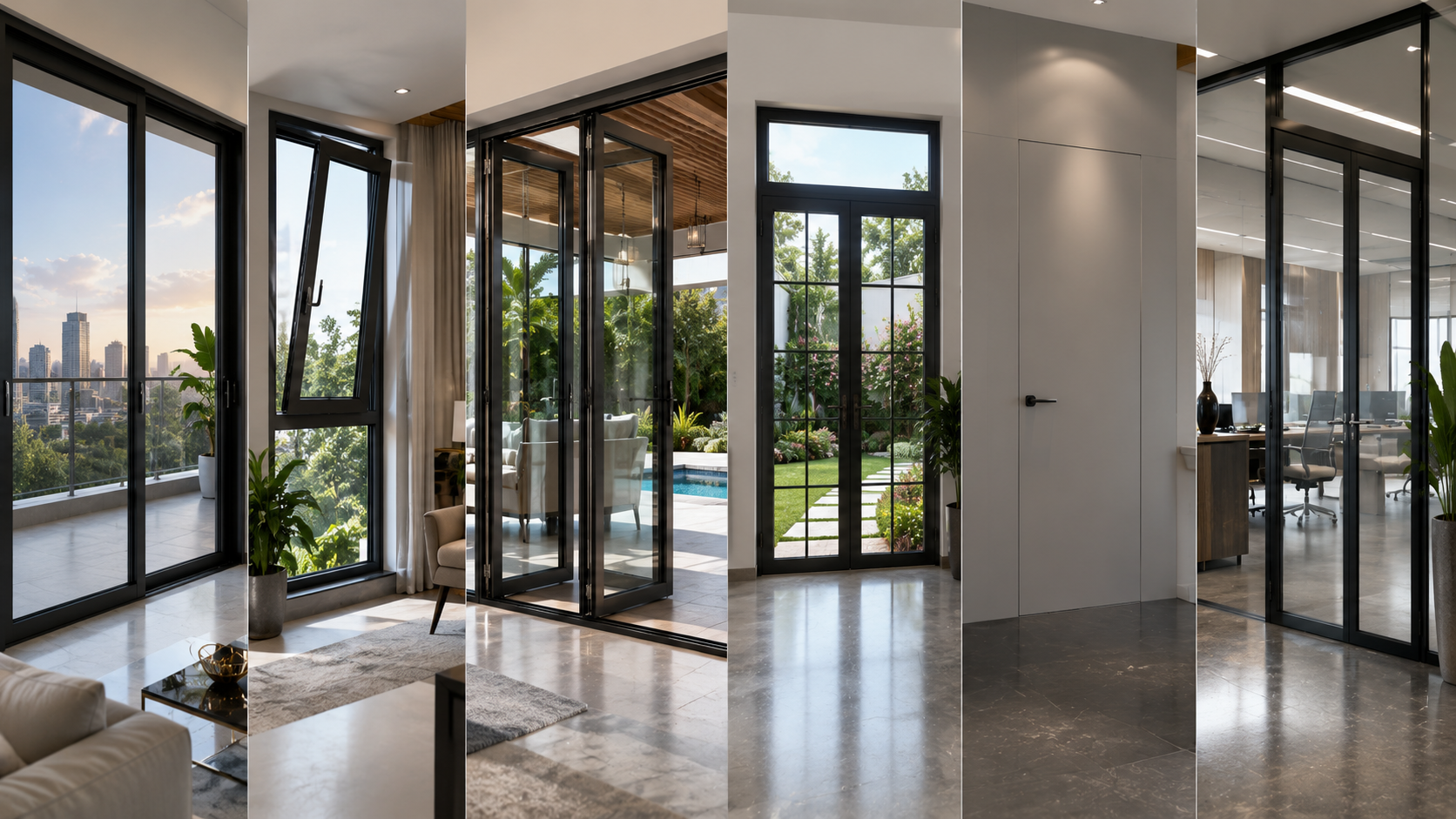
Depending on your requirement, you can choose from a range of frame types, including:
- Sliding Door — space-saving and smooth to operate
- Casement Door — better ventilation and tighter seals
- Folding Door — ideal for wide openings like balconies
- French Door — elegant, symmetrical outward-opening design
- Invisible Door — minimal, flush finish for a seamless look
- Partition Door — used for internal office or room dividers
Tips for a Durable Aluminium Door Frame
- Ensure that you select aluminium profiles that are corrosion resistant and powder coated.
- It is important that the gaskets and sealants are of high quality since poor sealing is one of the major reasons why leaks occur.
- In case of larger doors, ensure that you go for aluminium profiles with reinforcements to prevent the door from sagging.
- It is also important to have appropriate hardware like hinges for easy movement.
- Always deal with an experienced fabricator and installer.
Why Choose Corinzo for Aluminium Door Frames
Here at Corinzo, we have been producing aluminum door frames of superior quality made from extruded profiles, precise fabrication and robust hardware. With more than 18 years of experience in this industry and state-of-the-art manufacturing facilities, we are proud to offer you custom aluminum doors for any construction in India.
Take a look at our full line-up of aluminum doors which includes sliding, casement, folding and French doors or contact us via our contact page.
Frequently Asked Questions
1.What materials should be used for an aluminium door frame?
Aluminium door frames are made from aluminium profiles, cutting equipment, corner joints, rubber sealing strips, glass, hinges or sliding mechanisms, and silicone sealant.
2.How do you join the corners of an aluminium door frame?
Corners may be joined with crimping, corner brackets, or screws; the crimping method is used most frequently.
3.Is there any reinforcement necessary for aluminium door frames?
Reinforcement with galvanized steel inside the profile is recommended for larger aluminium door frames, including sliding doors and patio doors.
4.Which glass should be chosen for aluminium door frames?
The most commonly recommended type of glass is tempered or laminated glass for safety reasons.
5.How much time does it take to manufacture an aluminium door frame?
It takes several hours to one day to fabricate an average aluminium door frame.
Related Post: