
There is no doubt that the aluminium sliding doors have emerged as one of the most favoured options when it comes to residences, offices, and other commercial premises within India. With their sleek finish, easy function and space-saving design, aluminium sliding doors offer a viable alternative to the conventional hinged doors. In case you are interested in knowing the complete process of manufacturing of the aluminium sliding doors, then read on.
This article will provide you with the complete procedure from making the aluminium sections to the final product in the form of aluminium sliding doors.
Why Aluminium Sliding Doors Are So Popular
Before exploring the production process, however, it makes sense to find out why aluminium is now used in sliding door systems. It is light, durable, inherently corrosion-resistant, and needs minimal maintenance compared to wood and steel. Moreover, it is possible to create very slim profiles for frames, which means larger glass surface areas and more light entering — this is why aluminium is used in modern architecture.
These sliding doors complement well other aluminium constructions, including the aluminium sliding windows.
Step 1: Design and Measurement
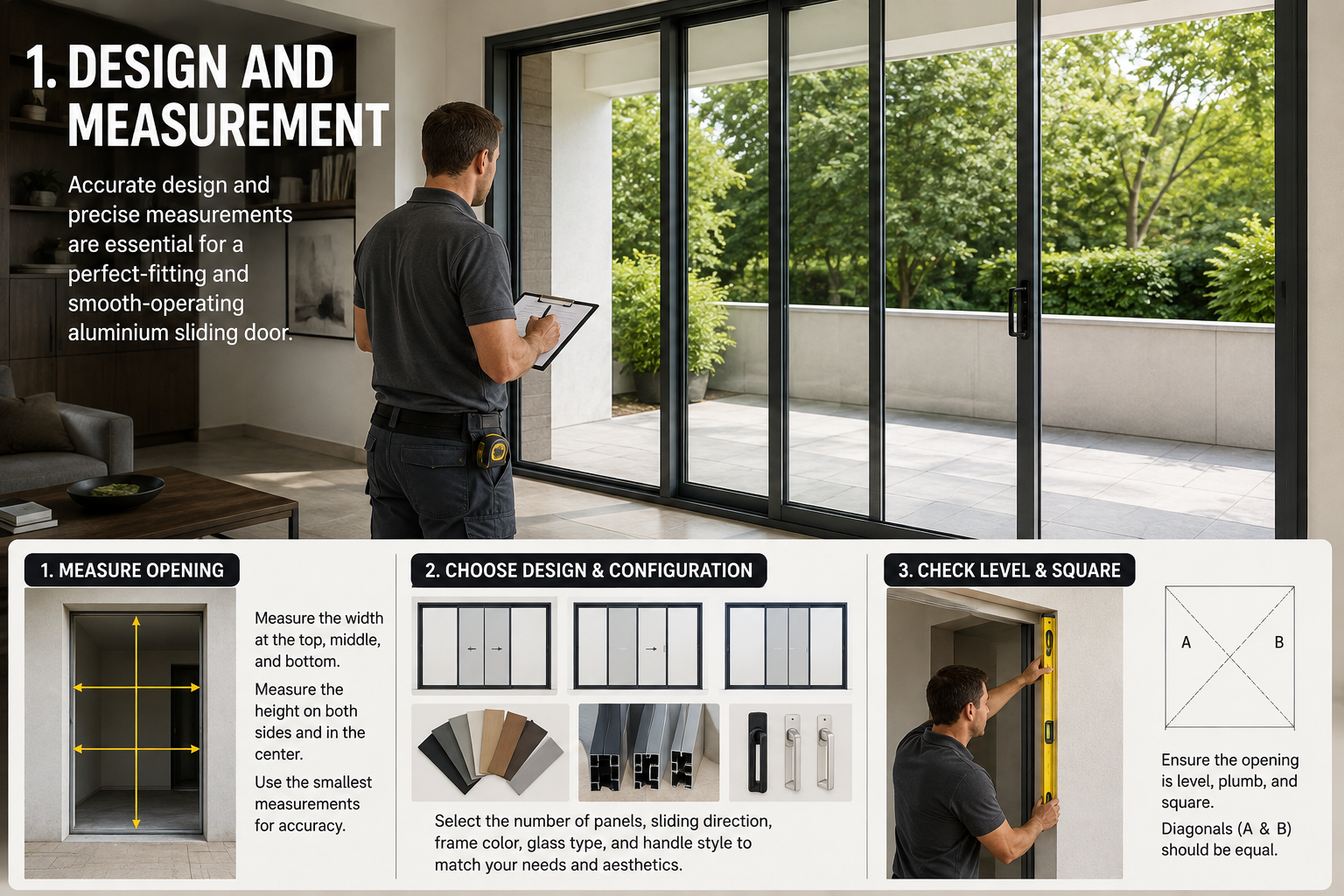
Manufacturing starts with the proper measurement of the site and planning of the design. At this stage, decisions are taken on the size of the opening, the number of panels (whether it should have two-panel, three-panel or multi-track), thickness of the glass used and the load that will be carried by the door.
Proper measurement is very important because any slight error can cause misalignment of the doors.
Step 2: Selecting the Aluminium Profile
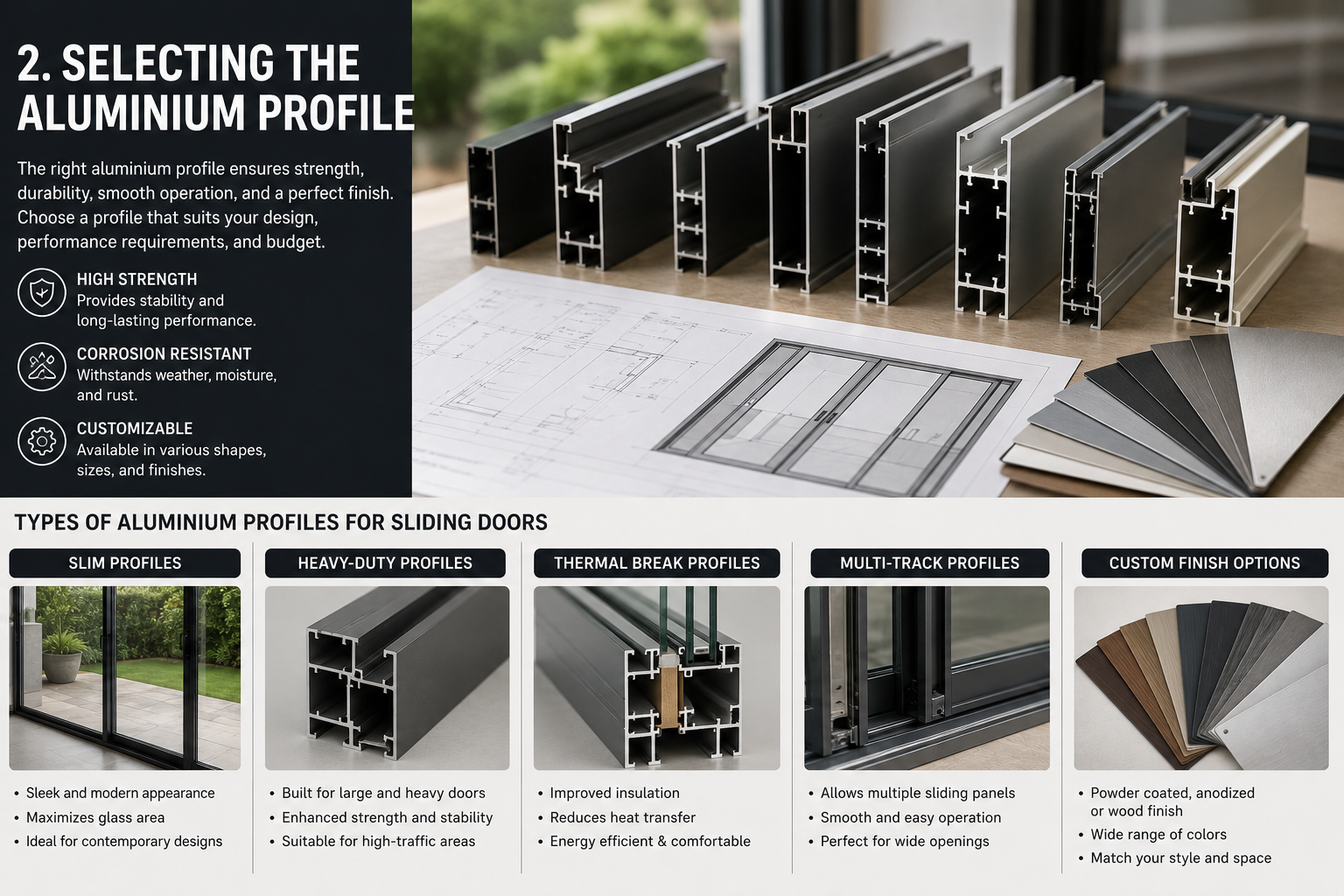
The aluminum extrusion that fits the required design and structure is chosen next. Aluminium profiles usually come in different types such as:
- Standard Sliding Profiles – For residential doors & windows
- Heavy Duty Profiles – For large openings
- Thermal Break Profiles – To improve insulation properties
Profile selection determines the strength, aesthetics, and wind resistance of the door; therefore, this stage should not be underestimated at all. This is also where the sliding door production merges with the wider Sliding Series product line, which includes not only doors but also windows based on the same principles of operation.
Step 3: Cutting the Aluminium Sections
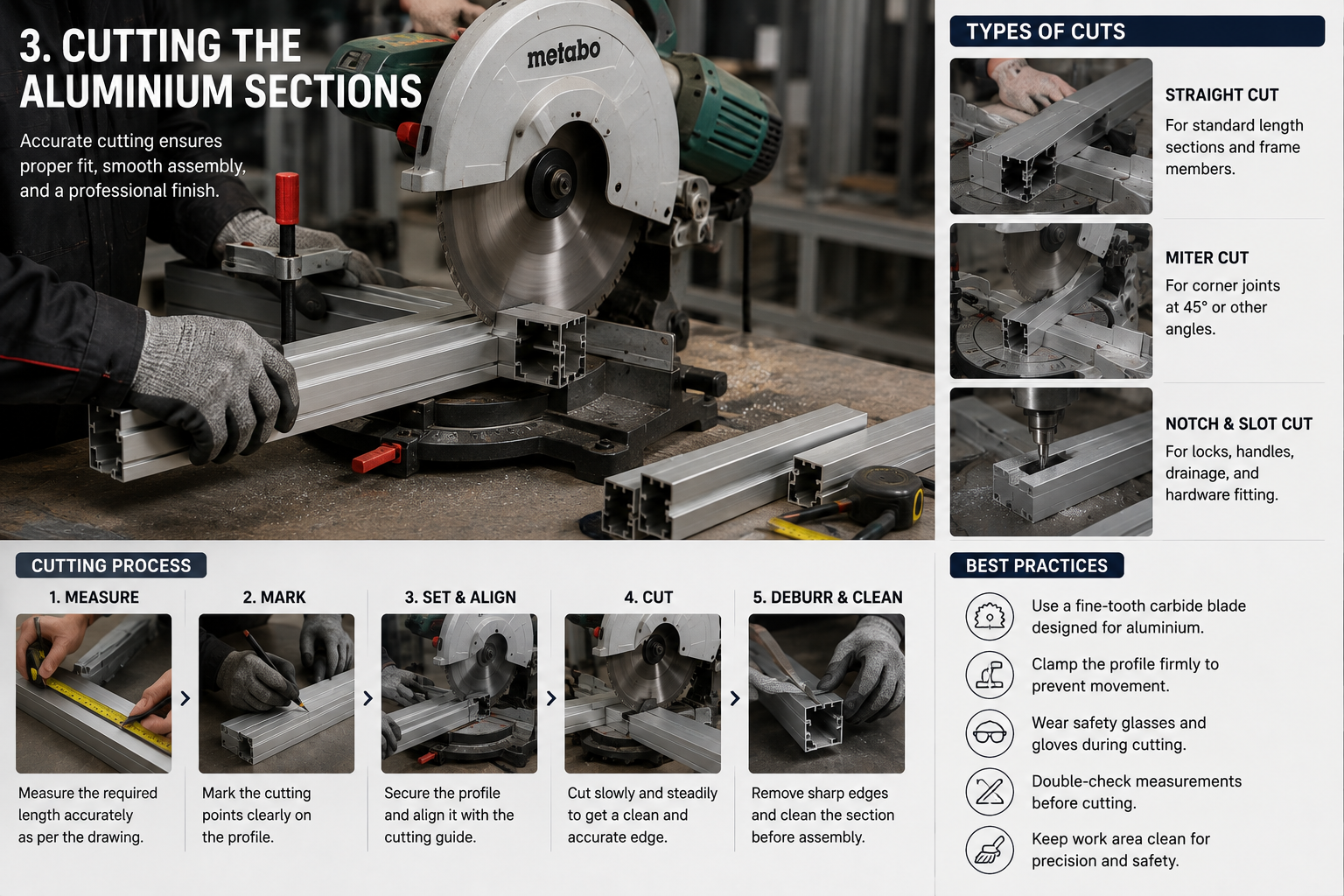
After selection of the profile, aluminium extrusion is precisely cut into exact size according to the frame and shutter measurements. Precision is a must for this process; otherwise, it can have an impact on the functioning of the final product because the frame, top rail, bottom rail, and stiles should all be of the exact size.
Step 4: Machining and Joinery
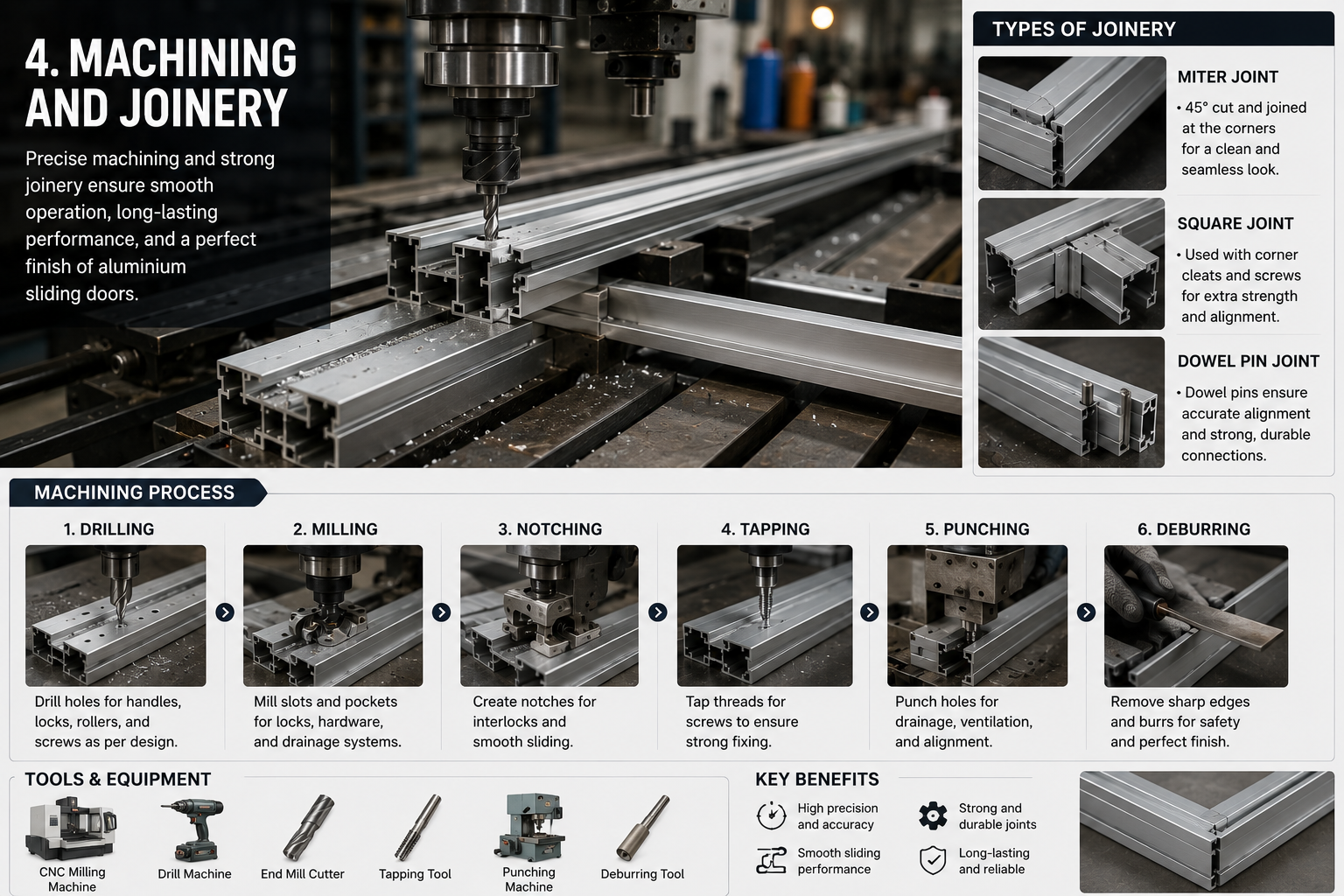
The cut parts undergo machining operations like notching, drilling, and corner cleating. The aluminum parts are then ready for joining to form a rigid structure. The corners of the structures will usually be strengthened using cleats and screws made of aluminum or nylon to make sure that the structure maintains its shape.
Joinery is one of the most vital considerations when ensuring that there will be no sagging of the structure, especially if it is a bigger structure carrying heavier loads of glass.
Step 5: Fitting Rollers and Hardware
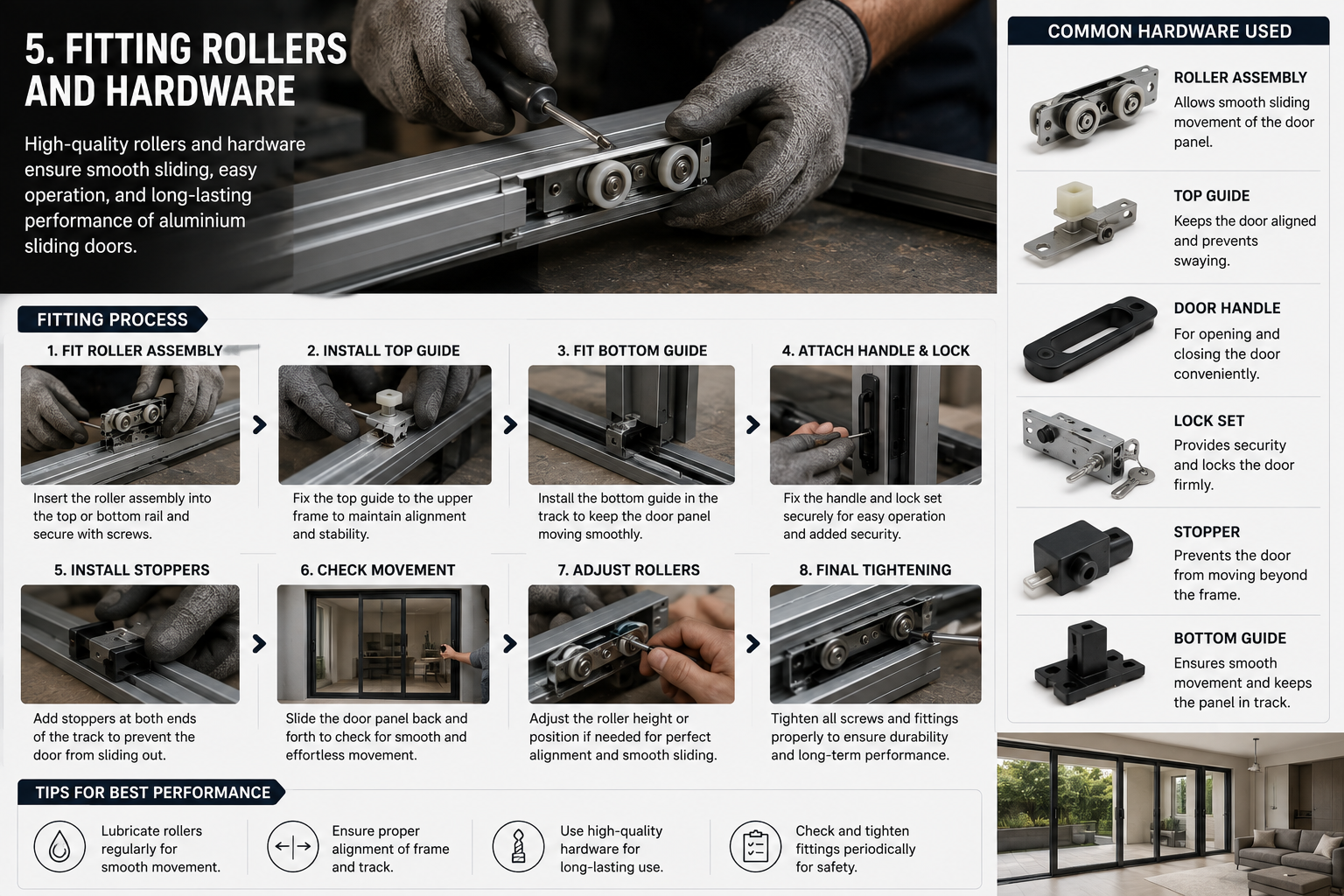
Hardware plays a key role in the functioning of sliding doors. The sliding doors have rollers made of nylon or steel mounted at the bottom of the panels for quiet operation along the rail system. Other hardware components that are important are:
- Multi-point locking systems
- Locks and handles
- Weather stripping and brushes
Anti-lift blocks (preventing the panels from being removed from the rails)
Hardware determines whether a sliding door functions perfectly or not.
Step 6: Glass Fitting and Glazing
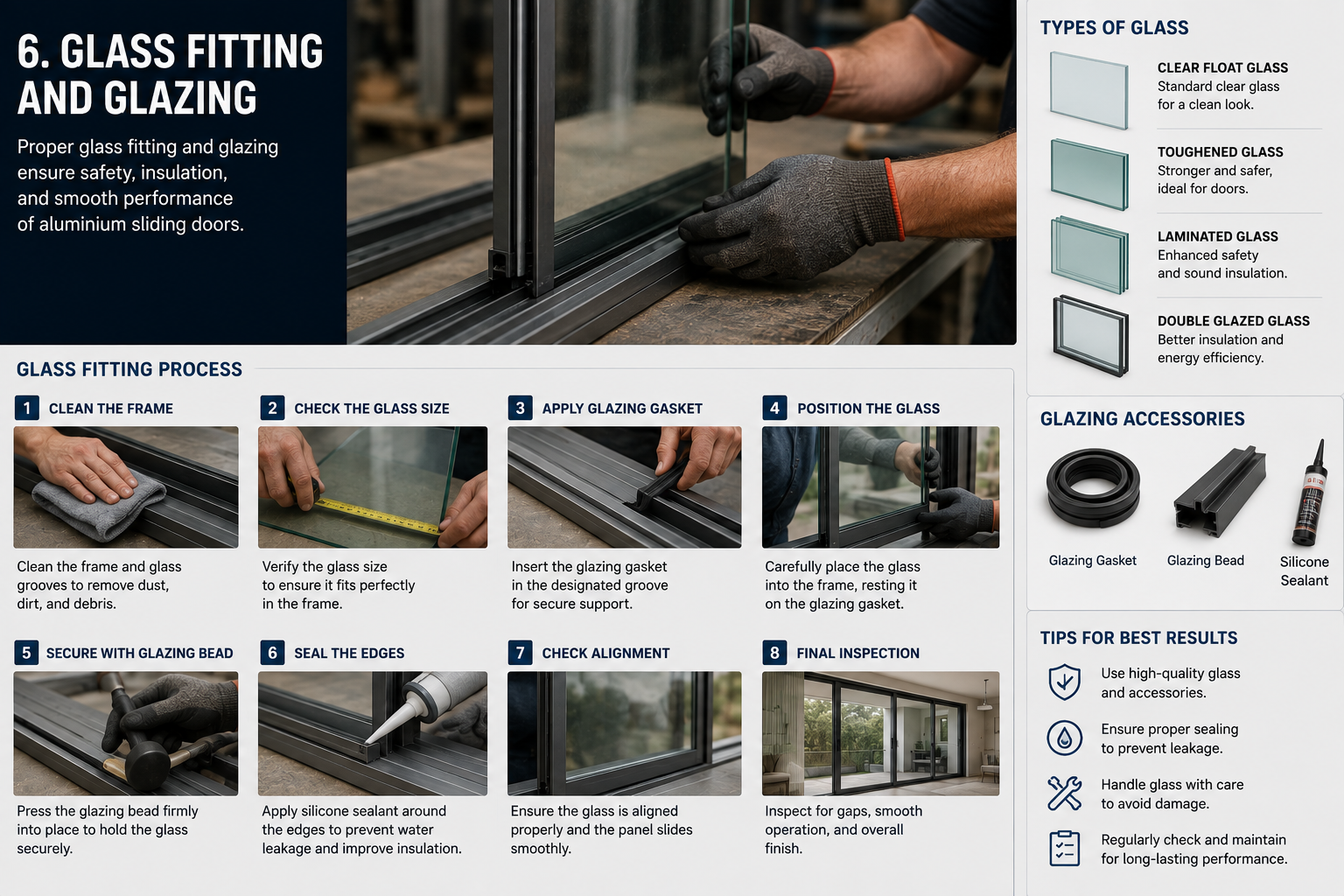
After assembling the frame and shutters, the glass panels are installed onto the shutters by means of rubber gasketing or glazing beads. This may be ordinary tonal glass, safety glass, or even double-glazed glass, according to the need. Corinzo also provides aluminum double glazed windows for those customers who seek such properties in their windows as well.
Glazing is important for ensuring that the glass is firmly secured and water does not seep into the door.
Step 7: Sealing and Weatherproofing
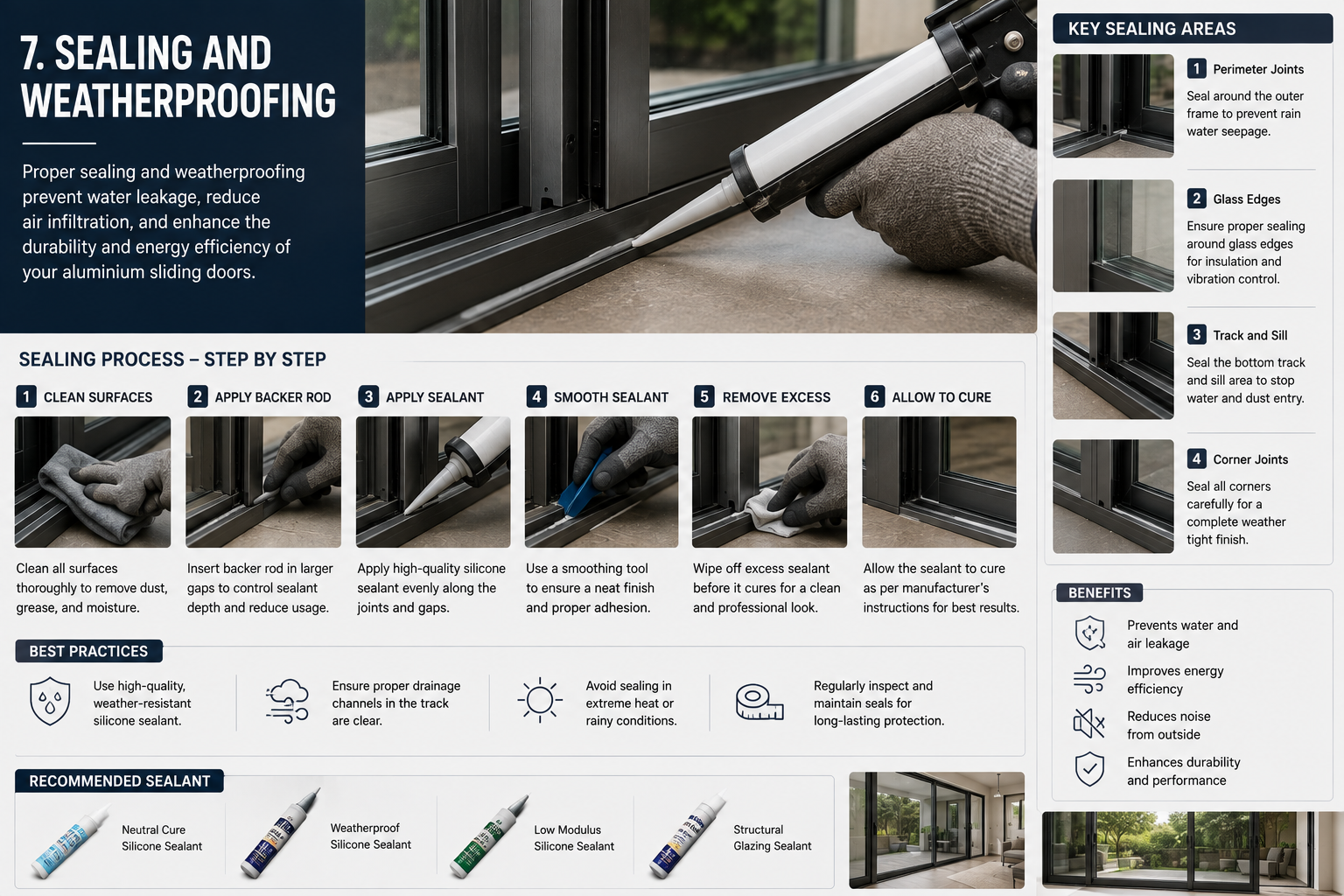
The joints in the frames and the edges in the tracks are sealed using weather stripping brushes, EPDM gasket material, and silicone sealant. It is required to prevent the passage of dust, moisture, and cold draughts. This is very essential keeping in view the different climate conditions prevailing in India.
Step 8: Quality Check and Finishing
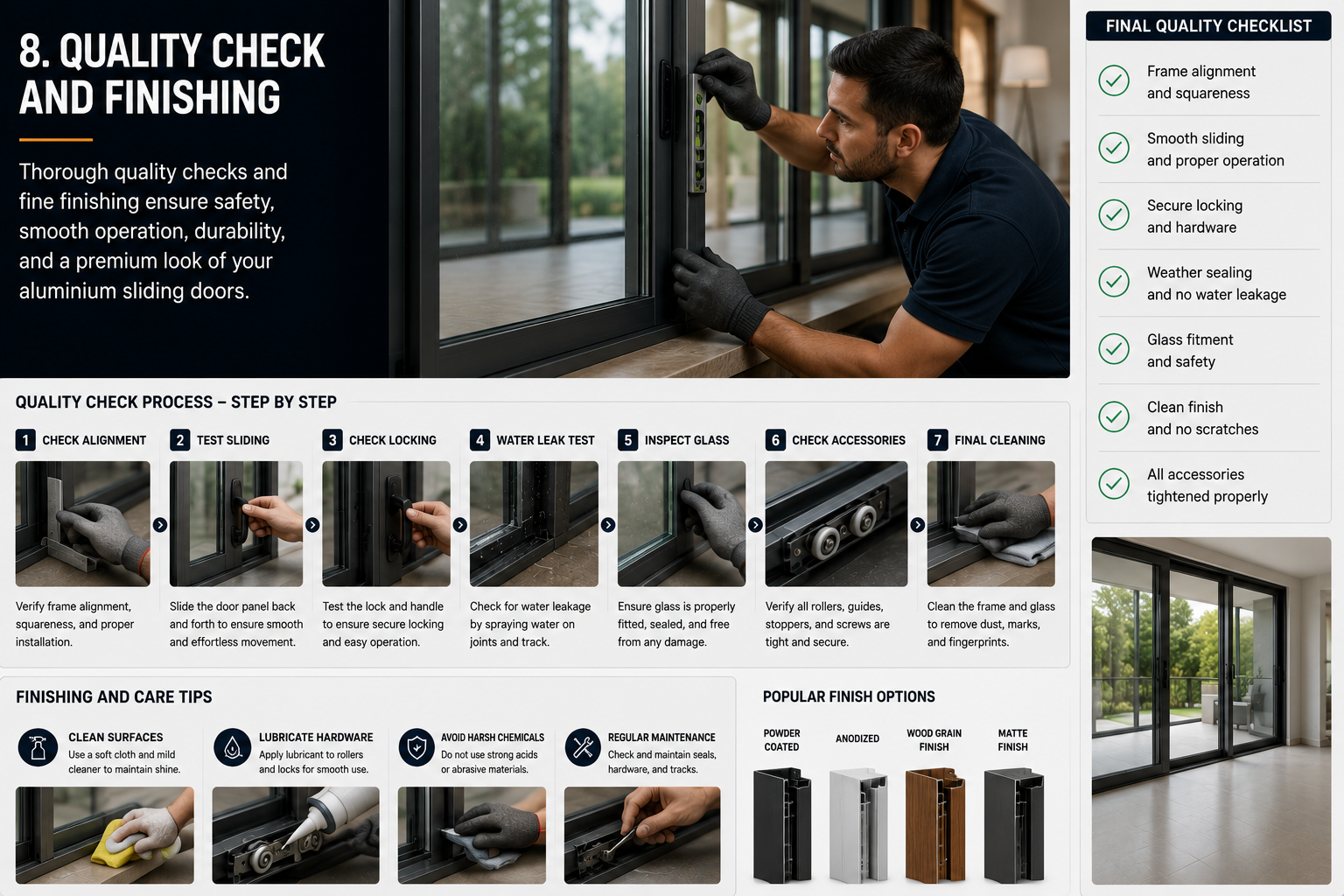
All doors have to be examined prior to installation. This includes examining the movement of the door, examining whether the door locks properly, examining whether there are any defects on the glass, and examining the squareness of the framework. Examination also has to be made regarding the condition of the door’s aluminum finish.
Step 9: Installation
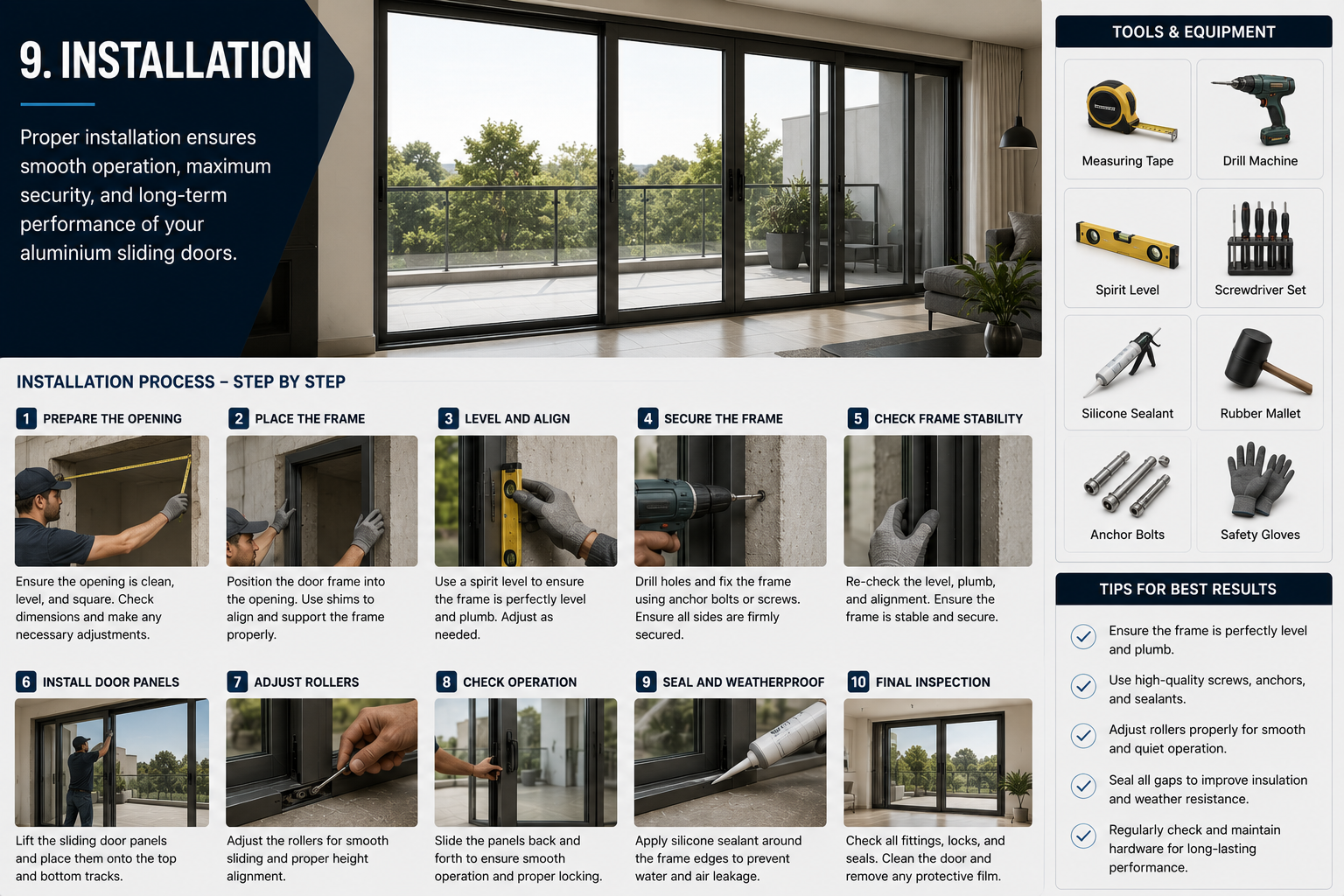
The last process is the installation of the built door on site. It entails securing the outer frame to the opening on the wall, making sure that it is both level and plumb, applying sealing to the edge, and mounting the sliding panels on the track.
In case of a full-scale renovation, it may be prudent to take a look at the entire range of aluminium doors, as having the same finish for frames will result in a coordinated look. If you wish to learn more about building the frame, then our guide on how to make an aluminium door frame is worth a read.
Choosing the Right Manufacturer
Even though it is useful to know how the products are manufactured, quality will finally come down to how your doors have been built. It is important to find a company that already has a production facility, aluminum profiles that are certified, and that has experience in working with both private and industrial customers.
The fabrication of aluminum sliding doors requires a delicate combination of precise measurements, appropriate choice of profiles, meticulous machining, and dependable hardware. The importance of each one of these processes is in the proper functioning of the door. Knowing about the process involved in making the doors enables consumers to be in a position to judge quality and pick an appropriate manufacturer.
Frequently Asked Questions
1.How long will it take to fabricate the aluminium sliding doors?
The time of manufacturing will depend on the size, complexity of design, and order quantity, but normally, it will take only a few days up to one/two weeks from measuring until delivery.
2.What would be the best aluminium profile for sliding doors?
For regular use at home, you should select a standard sliding profile, however, if you need something special, heavy-duty or thermal break aluminium profiles would be preferable.
3.Are aluminium sliding doors better than wooden ones?
Sure, because aluminium sliding doors do not suffer from moisture, warping, and termites like the wooden ones, and require minimum maintenance.
4.Can aluminium sliding doors be made in custom sizes?
Certainly, you can find custom aluminium sliding doors for whatever opening size you may have.
5.Which glass suits best for aluminium sliding doors?
Normally, the tempered safety glass is used for sliding doors because of the high level of safety and durability. However, double glazed glass will be better if you prefer better thermal/sound insulation.
6.Do aluminium sliding doors require any maintenance?
Not really, they do not require any maintenance except occasional cleaning of tracks and rollers as well as occasional cleaning of the door frame itself.
7.Where can I get custom aluminium sliding doors made in India?
Custom-made aluminum sliding doors and windows are available with Corinzo in India. We are located in Surat, Gujarat.
Related Post: