
A tilt and turn window is a window that has the capability of providing two types of openings in one window through the proper positioning of the window handles. In the right positioning, the window can tilt inward from the top or open inward from the side.
Such windows can be used in a bedroom, lounge room, kitchen, and office because of the need for ventilation and easy cleaning. The aluminium tilt and turn windows made by Corinzo work on the same principle using the inward opening and multipoint locking system.
If you have recently installed such windows but don’t know how to use them, this is the guide for you.
What Is a Tilt and Turn Window?
The tilt and turn window is an opening window and has two main positions:
Tilt position – The top of the window slides into the room while the bottom stays attached to the frame, hence providing ventilation.
Turn position – The entire sash opens inward on the sides, offering a bigger opening.
According to Corinzo, Corinzo’s tilt and turn window offers both ventilation and access, and in the case of the turn position, makes cleaning easier too.
As compared to a traditional sliding window that slides horizontally on tracks, a tilt and turn window does not slide horizontally on a track but rotates using hinges.
How to Open a Tilt and Turn Window
Before operating the window, make sure there is enough space inside the room for the sash to open. Keep furniture, curtains, plants, and other objects away from the window.
Step 1: Check the Handle
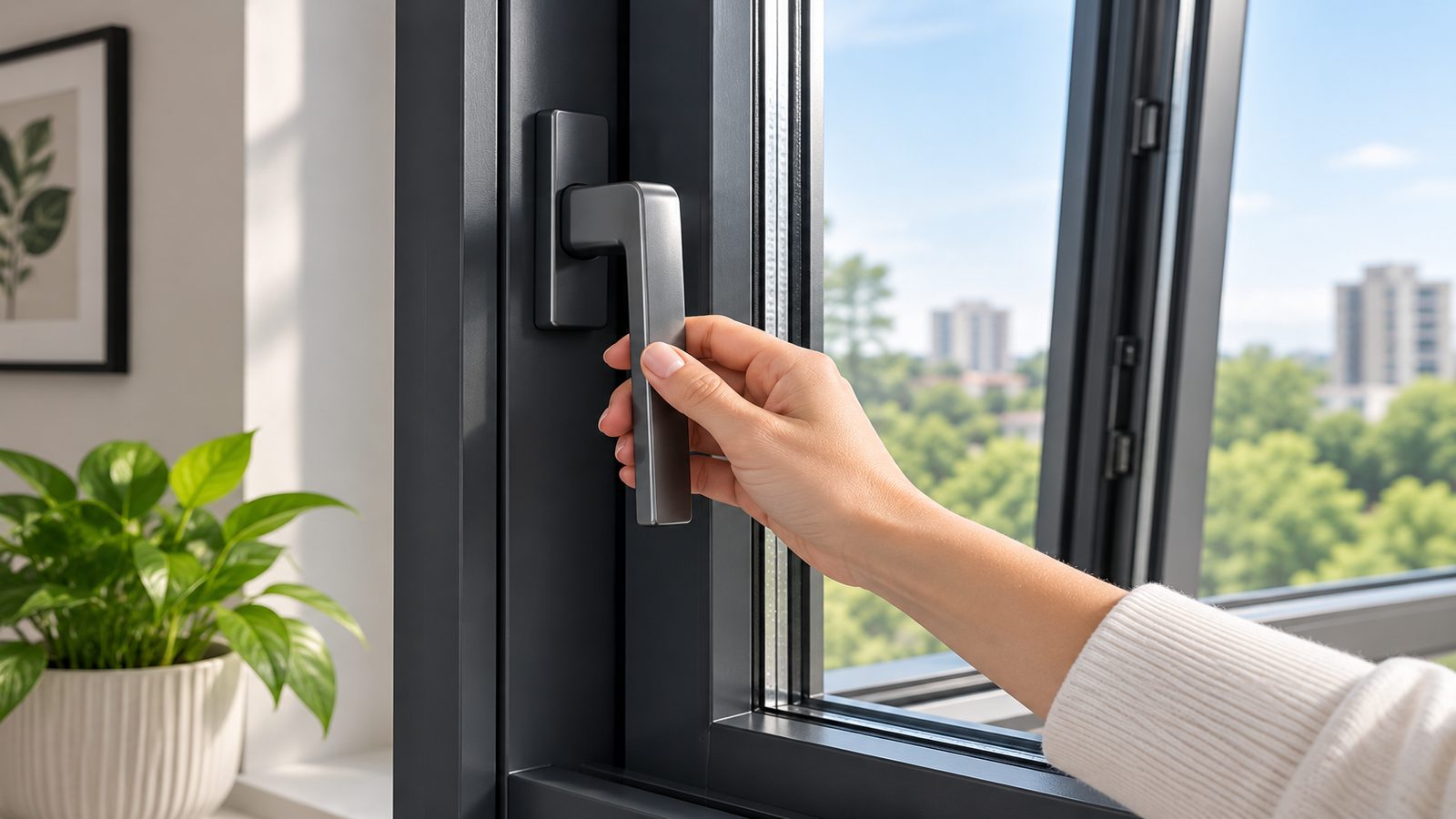
Stand within the room and find the window handle.
Usually, the handle will operate if the window is locked, tilted, or open.
The position of the handle may differ based on the mechanism.
Do not forcibly move the handle if it seems to be jammed.
Step 2: Unlock the Window
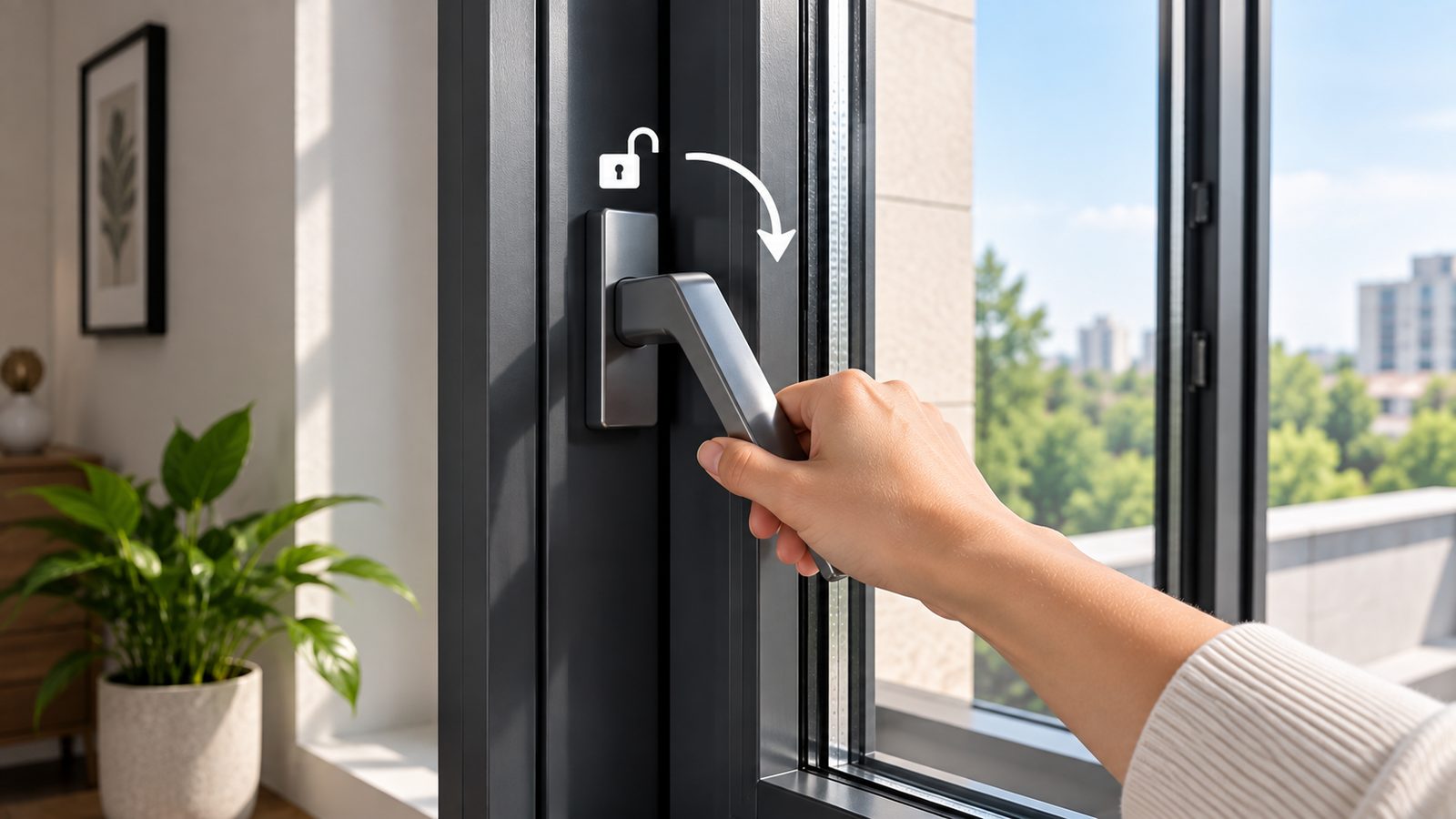
Adjust the handle into the open/unlocked position.
In most tilt-and-turn windows, the handle will be pointing downwards in the locked position and moving it to the open position will release the lock points.
Positions may vary according to manufacturers, so it is best to follow the instructions provided for the specific window.
Step 3: Tilt the Window for Ventilation
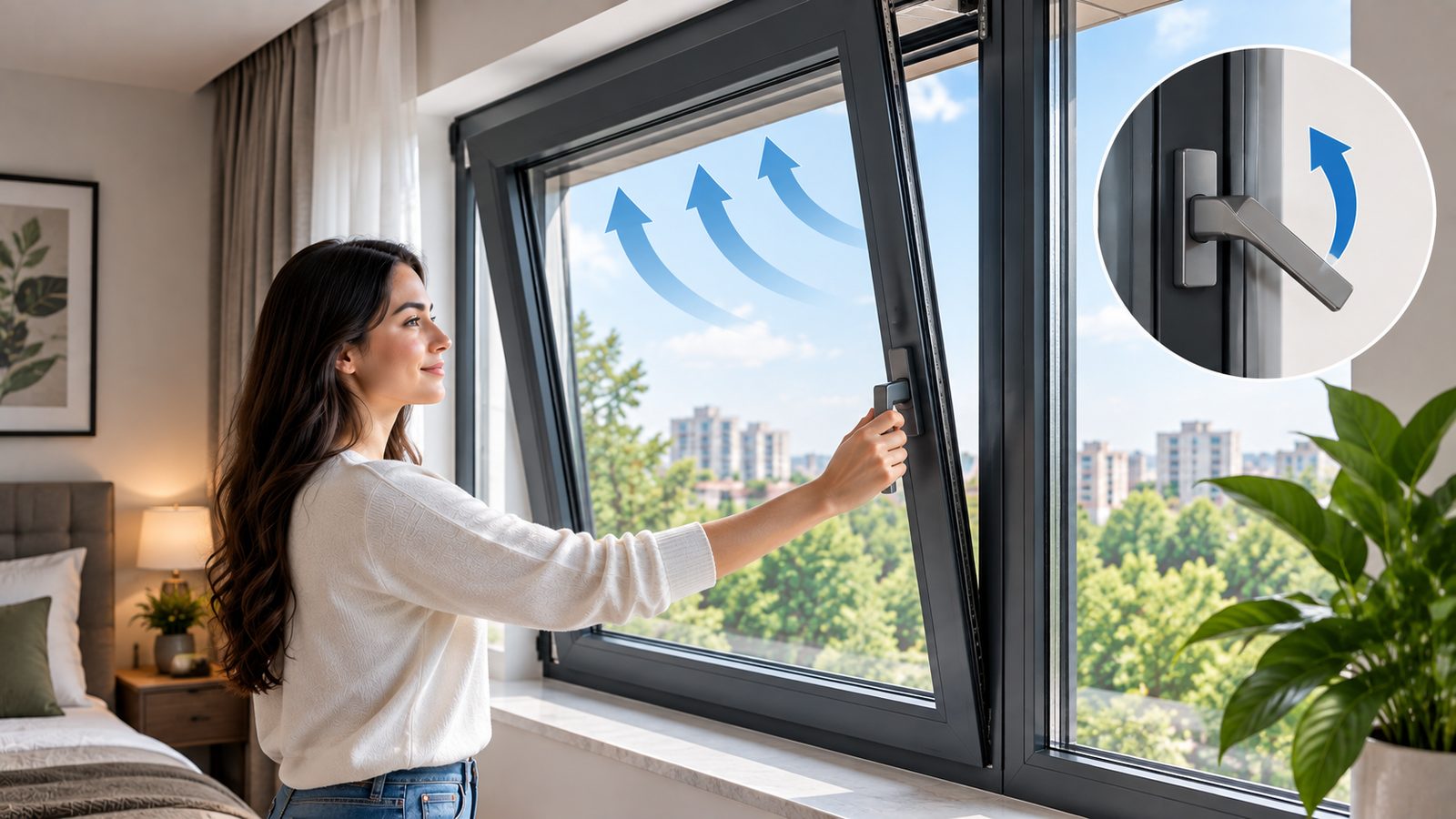
In order to operate the tilt feature, the handle needs to be put in the tilt position, and then one should pull the top of the sash towards themselves.
While the bottom of the window stays attached to the frame, the top one slides in.
This leads to the creation of a smaller opening at the top.
The tilt position is perfect for those who need:
- Fresh air
- Ventilation
- Minimal contact with the room
- Constant flow of air without opening the window fully
According to Corinzo, the tilt position is great for letting the breeze in.
How to Fully Open a Tilt and Turn Window
If you need a larger opening, use the turn function.
Step 1: Close the Tilt Position
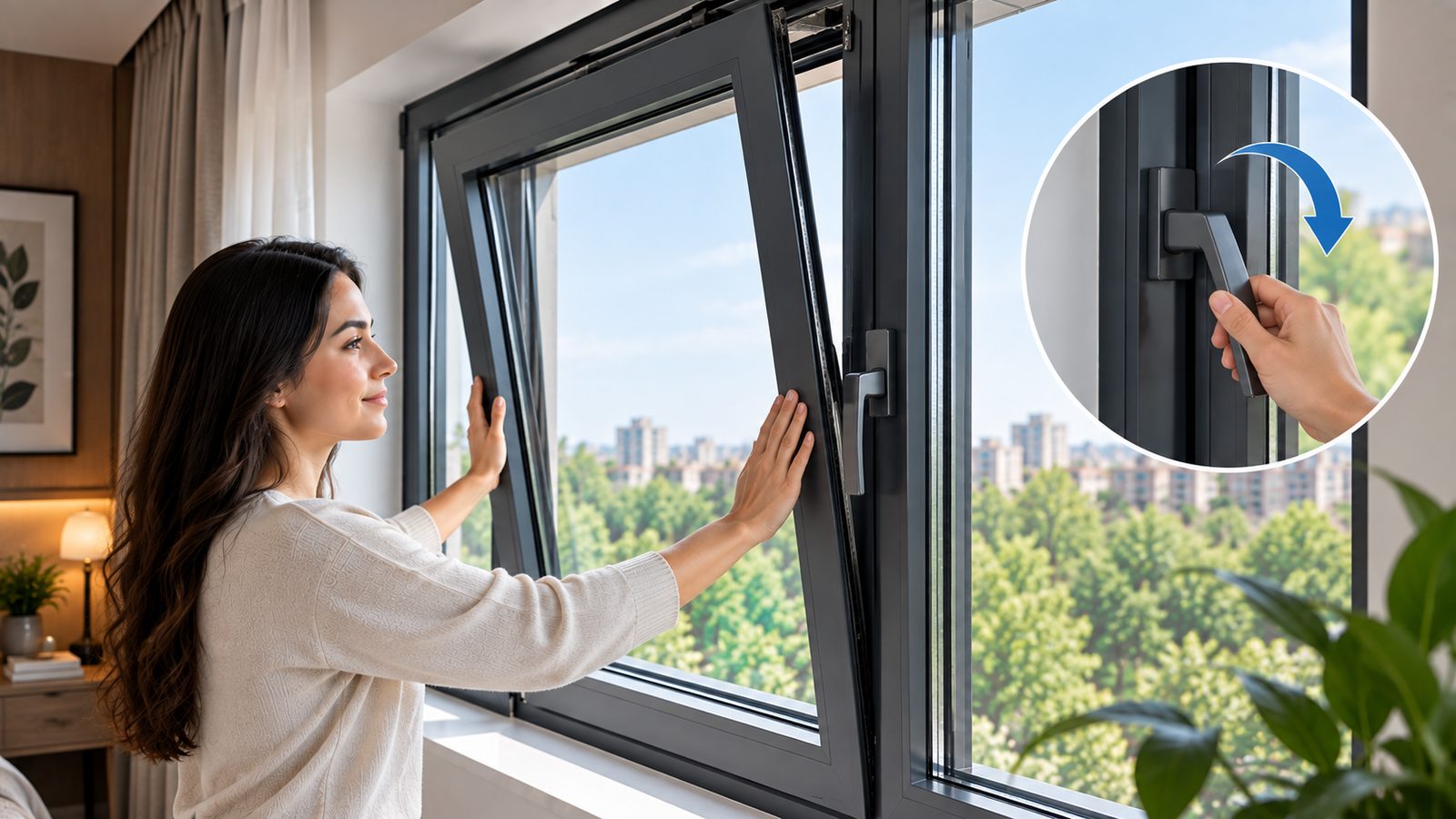
If the window is in the tilt position, simply press the sash down into the frame.
Ensure that the sash is completely seated before altering the position of the handle.
Step 2: Move the Handle to the Turn Position
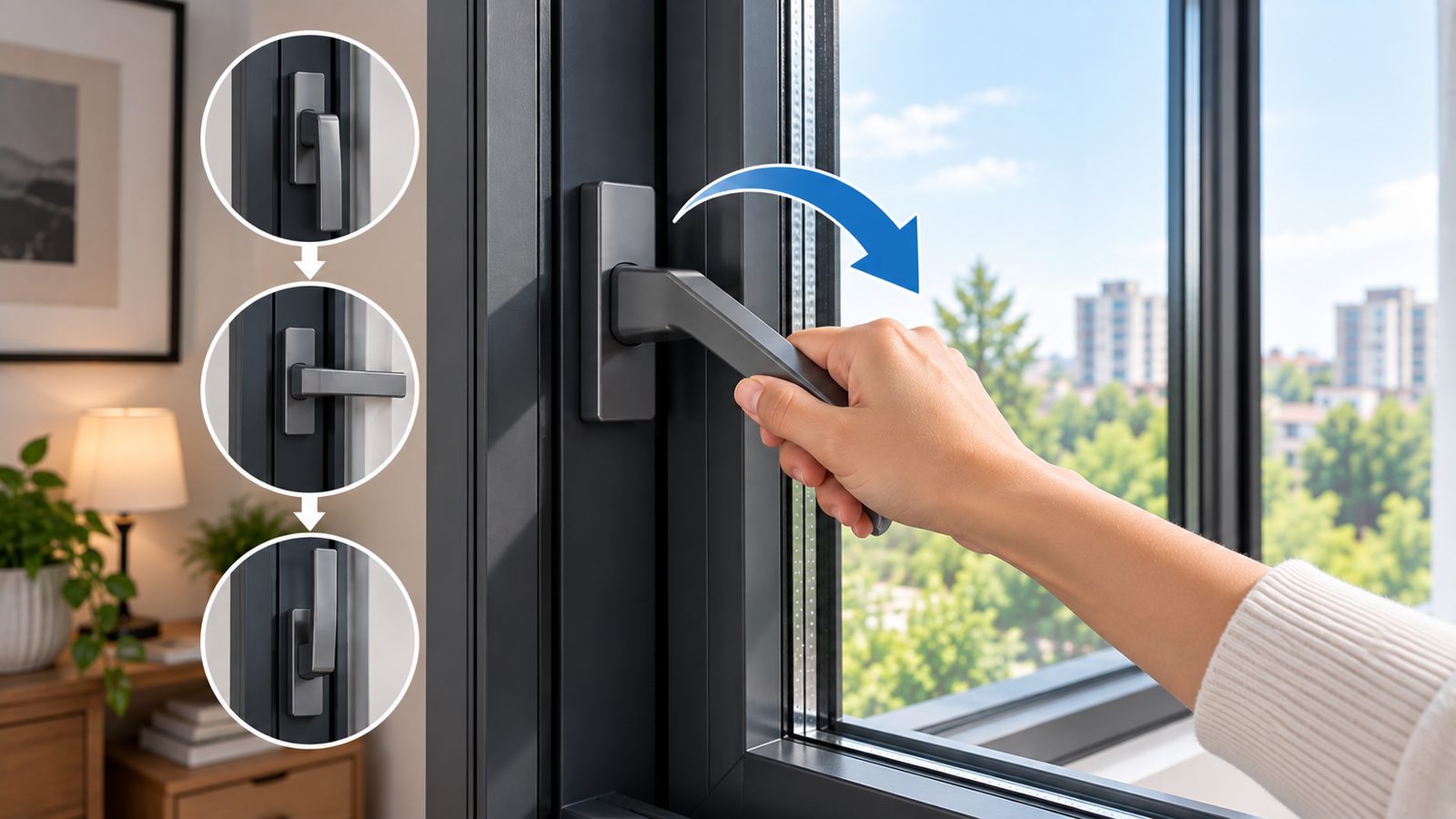
Once the sash is closed, change the position of the handle to its full opening position.
As always, the handle position will vary depending on the specific window hardware you have.
Step 3: Pull the Handle Toward You
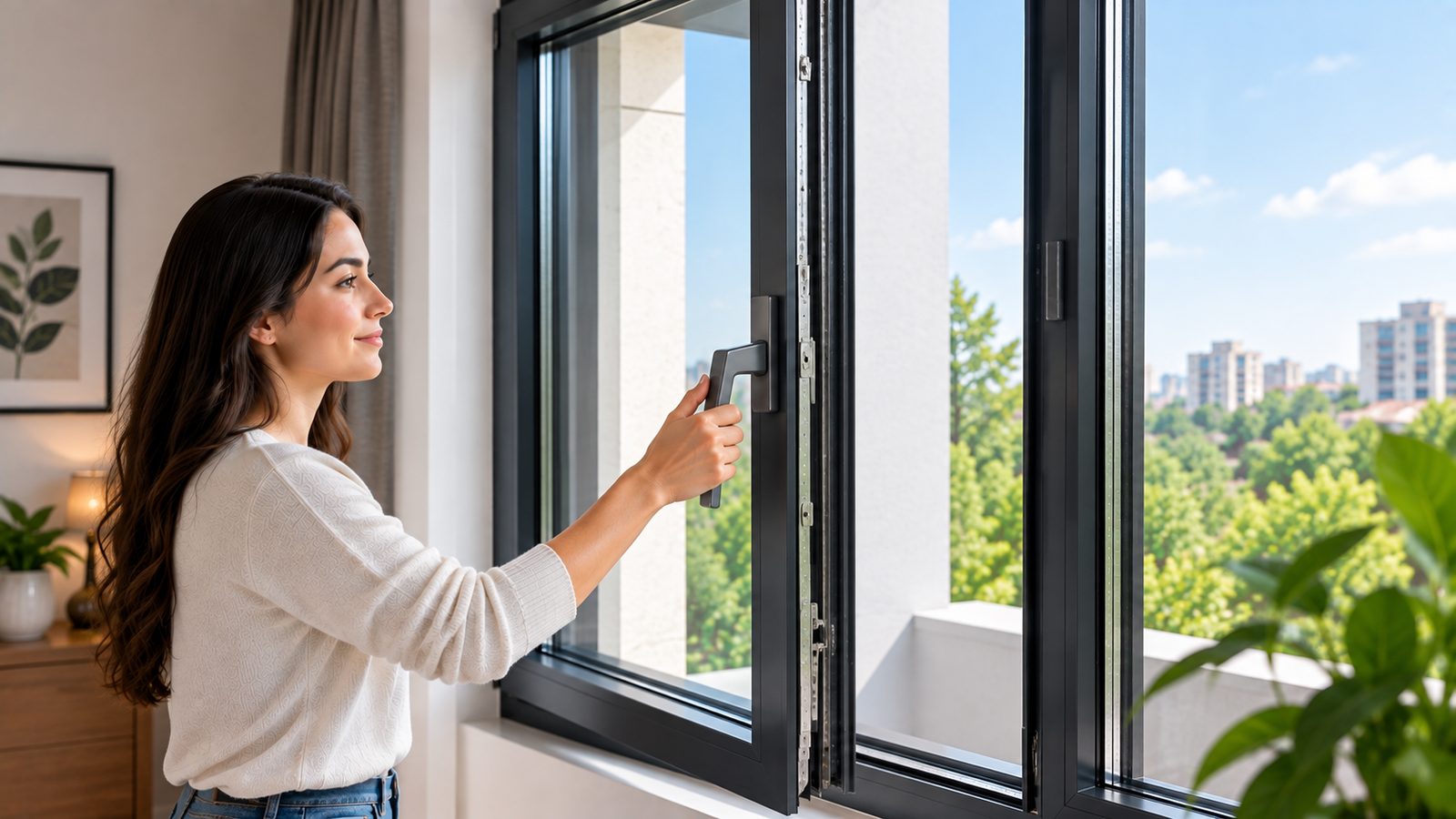
Pull the handle gently towards yourself.
The sash will open towards the inside from one of the sides of the window frame, much like a casement window.
Avoid any forceful movement. If the sash does not open easily, ensure that the handle is in the right position.
Step 4: Open the Sash to the Required Angle
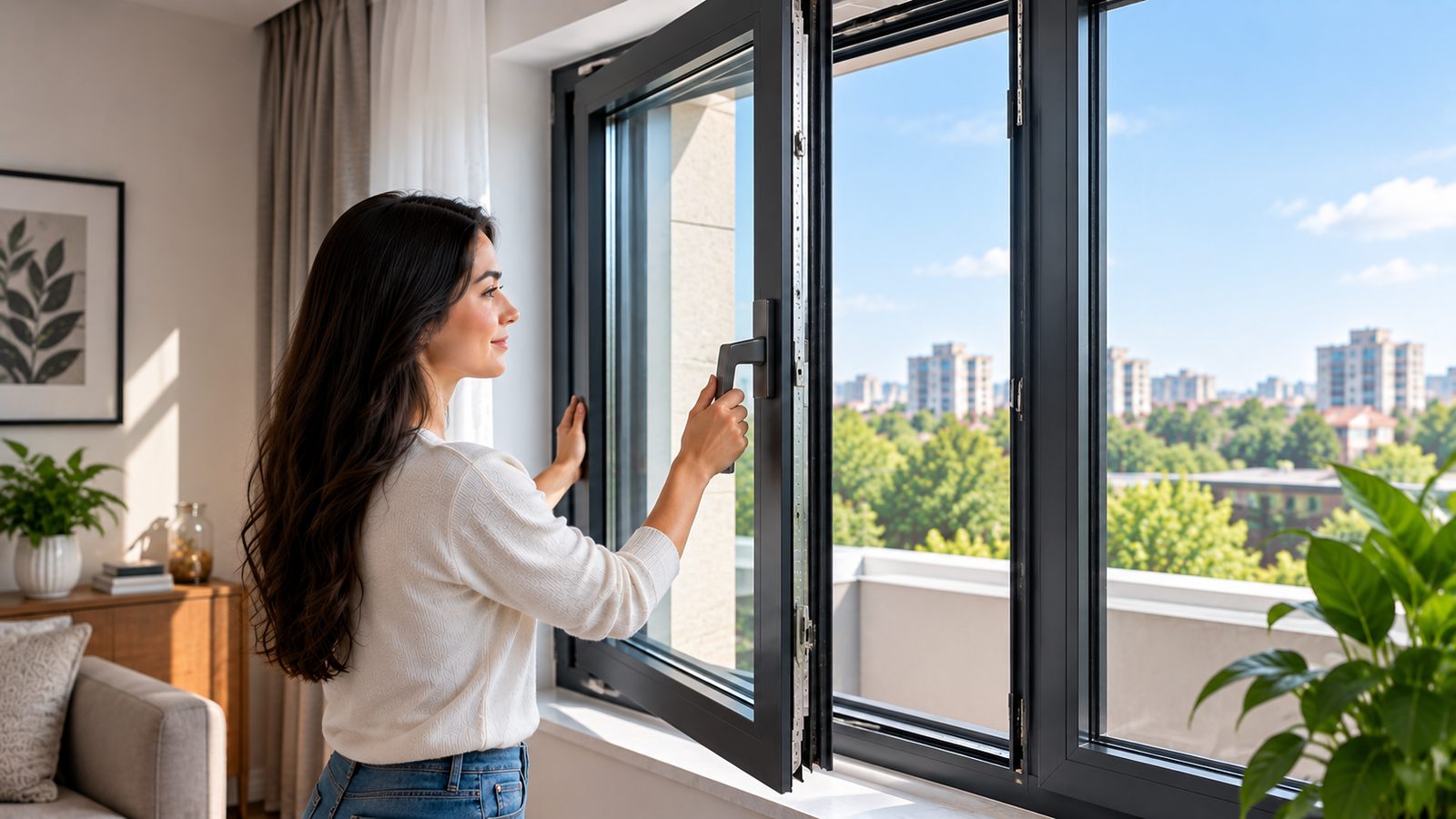
When the window has been opened, you can open it to the required angle depending on the available space.
This move position is also helpful when you want to clean the glass easily.
Corinzo notes that the turn feature makes it easy to clean the glass.
How to Close a Tilt and Turn Window
Closing the window is usually easy.
- Bring the opened sash to its frame.
- Ensure that the sash aligns properly on the frame.
- Place the handle back in the locked position.
- Verify that the sash is closed properly.
In case the handle fails to lock itself normally, do not attempt to force it. The sash may be improperly aligned with the frame.
Tilt Position vs Turn Position
Understanding the difference between the two functions makes the window easier to operate.
| Function | How it opens | Main purpose |
| Tilt | Top moves inward | Controlled ventilation |
| Turn | Entire sash opens inward | Larger opening and cleaning |
| Closed | Sash sits against frame | Security and weather protection |
The exact hardware movement can vary between manufacturers and systems, so the installation manual supplied with the window should take priority.
When Should You Use the Tilt Function?
Tilt mode comes in handy when ventilation but not full opening of the window is needed.
For instance, one may choose this mode when:
- One requires fresh air for work
- There is need for bedroom ventilation
- Need to decrease the size of the opening
- Need to have some airflow without the whole window being opened
Corinzo’s tilt and turn window system is built around this principle of two modes of opening.
When Should You Use the Turn Function?
The turn position offers more opening space as well as easy access to the window.
This may be helpful when:
- You require maximum ventilation
- You have to clean the exterior glass
- You wish to examine the window
- You require more opening space
Since the sash is operated inward, ensure that the surrounding space of the window is clear before using it.
Common Problems When Opening Tilt and Turn Windows
Sometimes a tilt and turn window may not operate as expected. Here are some common situations.
The Handle Feels Stuck
Do not force the handle.
It is essential to check if the sash is fully closed and in place against the frame. The tilt and turn hardware uses multiple locking points, and hence the handle will not operate
The Window Opens Only in One Position
The Window Tilt or Turn Operates in Only One Direction
If the window either tilts but does not turn or turns but does not tilt, the problem might arise from the handle, lock, hinges or sash misalignment.
Refer to the manufacturers’ instructions when carrying out the repair.
The Window Does Not Close Properly
Check if there is:
- Any obstruction in the frame
- Any dirt on the seals
- Sash not being in the right position
- Loose handles
- Misalignment
It is better to contact the installer or manufacturer rather than forcefully operating the sash.
The Handle Turns but the Window Does Not Open
This problem can mean a malfunction in the locking system or hardware.
Do not use any force as it can break the handle or hardware inside.
How to Clean Tilt and Turn Windows
An additional benefit of the turn function is that it makes it easy to access both inner and outer sides of the glass.
Window cleaning procedure:
- Lift the sash to the turn position.
- Ensure that the sash is well-supported.
- Use a soft cloth and appropriate glass cleaner.
- Frame cleaning can be done with a gentle cleaning solution.
- Dust removal from the seals and corners.
- Excess moisture wipe-off.
- Lock the window after cleaning.
Do not use harsh cleaning solutions which might damage the frame or its finish.
Maintenance Tips for Tilt and Turn Windows
Regular maintenance can help keep the window operating smoothly.
Clean the Frame
The aluminium frame of the window needs to be kept free of dust and dirt.
Keep the Hardware Clean
Dirt or any kind of debris needs to be cleared from hinges, handles, locks, and other parts that move.
Check the Seals
The rubber seals surrounding the sash need to be inspected. Any damage or displacement needs to be checked by a certified installer.
Do Not Force the Handle
In case the handle is not operating properly, stop right there and identify the problem.
Check Alignment
If the sash starts to rub against the frame or closes with difficulty, professional adjustments will be needed.
The range of Corinzo’s aluminium windows includes tilt and turn windows along with the casement windows.
Benefits of Tilt and Turn Windows
Tilt and turn windows are popular because one window provides two opening methods.
Dual Opening
You have two options, either ventilation mode or wide opening mode.
Ventilation
Tilt mechanism enables air circulation through the upper portion of the window.
Easy Cleaning
Turn mode offers internal cleaning of glass panels.
Modern Appearance
Aluminium tilt & turn systems offer slim and contemporary look.
Security Features
Multi-point lock hardware is used by some systems. Multi-point locking is one of the features offered by Corinzo tilt and turn window system.
Flexible Applications
It can be used in bedrooms, living rooms, kitchens, offices and any place where opening window is needed.
Tilt and Turn Windows vs Sliding Windows
Both systems can be suitable for modern homes, but they operate differently.
| Feature | Tilt & Turn Window | Sliding Window |
| Opening | Tilts or opens inward | Slides horizontally |
| Ventilation | Controlled or wide | Depends on opening area |
| Cleaning | Inward opening can help access | Depends on installation |
| Space requirement | Requires interior swing space when turned | Requires little swing space |
| Design | Modern and versatile | Simple and space-saving |
| Best suited for | Rooms needing flexible ventilation | Balconies and areas with limited swing space |
If interior space is limited, a sliding system may be more suitable. Corinzo’s aluminium sliding windows are designed to move along rails without requiring the same swing space as an openable window.
You can explore Corinzo Aluminium Sliding Windows when comparing the two systems.
Tilt and Turn Windows for Modern Homes
It is possible to apply tilt and turn windows in contemporary houses because they provide a simplistic design and two opening modes.
The aluminium window system of Corinzo consists of Tilt & Turn, Romica, parallel opening, sliding windows, and many others.
Moreover, in case the consumer is willing to have slim profiles, then there are aluminium slim windows by Corinzo too.
You can explore Corinzo Aluminium Slim Windows for more information.
Frequently Asked Questions
1.How would one open a tilt and turn window?
In most cases, the tilt and turn window has a handle that determines the opening position of the window. When in one position, the window tilts at the top to allow ventilation. Another position allows the window to open entirely.
2.What is the direction of opening of the tilt and turn window?
The tilt feature opens the window at its top while the turn feature allows the window to open at its side.
3.Can tilt and turn windows open entirely?
Yes. In the turn mode, the window opens wider compared to the tilt mode.
4.Is the tilt and turn window good for ventilation purposes?
Yes, since the tilt mode was developed for ventilation. According to Corinzo, the tilt mode enables a gentle breeze into the room.
5.Is it possible to clean the outside glass of a tilt and turn window from the inside?
The turn mode makes the external glass accessible to cleaning from the inside provided that the window is large enough.
6.Why won’t my tilt and turn window open?
Because of an incorrectly positioned handle, the sash may not be closed, or there may be some other problems with the window hardware.
Knowing how to open both types of tilt and turn windows is easy as long as one knows how they should be used. The tilt function is best for when you require ventilation, while the turn function is recommended when a bigger opening is required or when cleaning.
Ensure that you always work gently with the handle and that the window is in the correct position before switching from one function to another. In case of any stiffness, it is best not to force it and get the system checked.
For people looking for such window options, Corinzo provides aluminium tilt and turn windows under its casement window range, together with sliding, slim, parallel opening, fixed windows, among others.
Related Post:
How to Make Aluminium Mesh Door