
There is a need for the aluminium door frame to be well-aligned, secured, and sealed for the door to work normally. Should there be any looseness on the door frame, move from its position, any spaces created or should it not be well-aligned, then the door will either rub against the frame, be hard to close or allow wind, dirt, and water inside.
Luckily, most of the common repairs to the aluminium door frame can be diagnosed by inspection of the frame, fasteners, alignment, and sealant. However, when it comes to the cases of serious damage or distortion, the best solution is having professional services.
The following guide will take you through the process of repairing an aluminium door frame.
What Does “Fixing an Aluminium Door Frame” Mean?
It may refer to any of the following two cases:
- Placement or reinstallation of the whole frame within the wall opening
- Fixing of a loose, out-of-line or damaged frame
Both cases share some fundamental aspects. Proper alignment, fixation to the wall, leveling and squaring, as well as proper joint sealing are essential.
The guide for installation of Corinzo’s aluminum door-frame contains such steps as measurement of the wall opening, preparation of the surface, placing of the frame using wedges/spacers, leveling with the spirit level, fixing with screws and anchors and joint sealing.
Common Signs That an Aluminium Door Frame Needs Fixing
Before starting any repair, identify what is actually wrong with the frame.
1. Door Is Rubbing Against the Frame
If there is a rubbing action of the door against the frame when it is being opened or closed, the frame or the door could be out of alignment.
2. Frame Feels Loose
Loose screws, inappropriate anchorage or deteriorated condition of the anchoring points to the wall might be the reason for this situation.
3. Door Does Not Close Properly
Misalignment of the frame can result in the inability of the latch or lock to reach its appropriate place.Misalignment of the frame can result in the inability of the latch or lock to reach its appropriate place.
4. Gaps Around the Frame
The existence of the spaces between the aluminum frame and the wall allows the intrusion of dust, moisture, air, and noise.
5. Water Is Entering Around the Frame
Penetration of water into the room might happen due to improperly sealed joints or poor draining of the neighboring structures.
6. Frame Looks Twisted or Uneven
In case if one side is higher than the other, simple tightening will not be enough. The frame should be corrected.
Tools and Materials You May Need
The tools needed for an ordinary repair or installation job for an aluminium door frame will depend on the nature of the issue at hand.
Some of the basic tools that one might require include the following:
- Tape measure
- Spirit level
- Screwdriver
- Drill machine
- Correct type of screws
- Wall anchors
- Wood wedges/spacers
- Silicone/construction sealant
- Cleaning rag
- Safety gloves
- Safety glasses
The tool list in Corinzo’s installation guide also includes some of the above-mentioned tools along with hammer and safety goggles among others.
Tools for frame fabrication/replacement.
Step 1: Inspect the Aluminium Door Frame
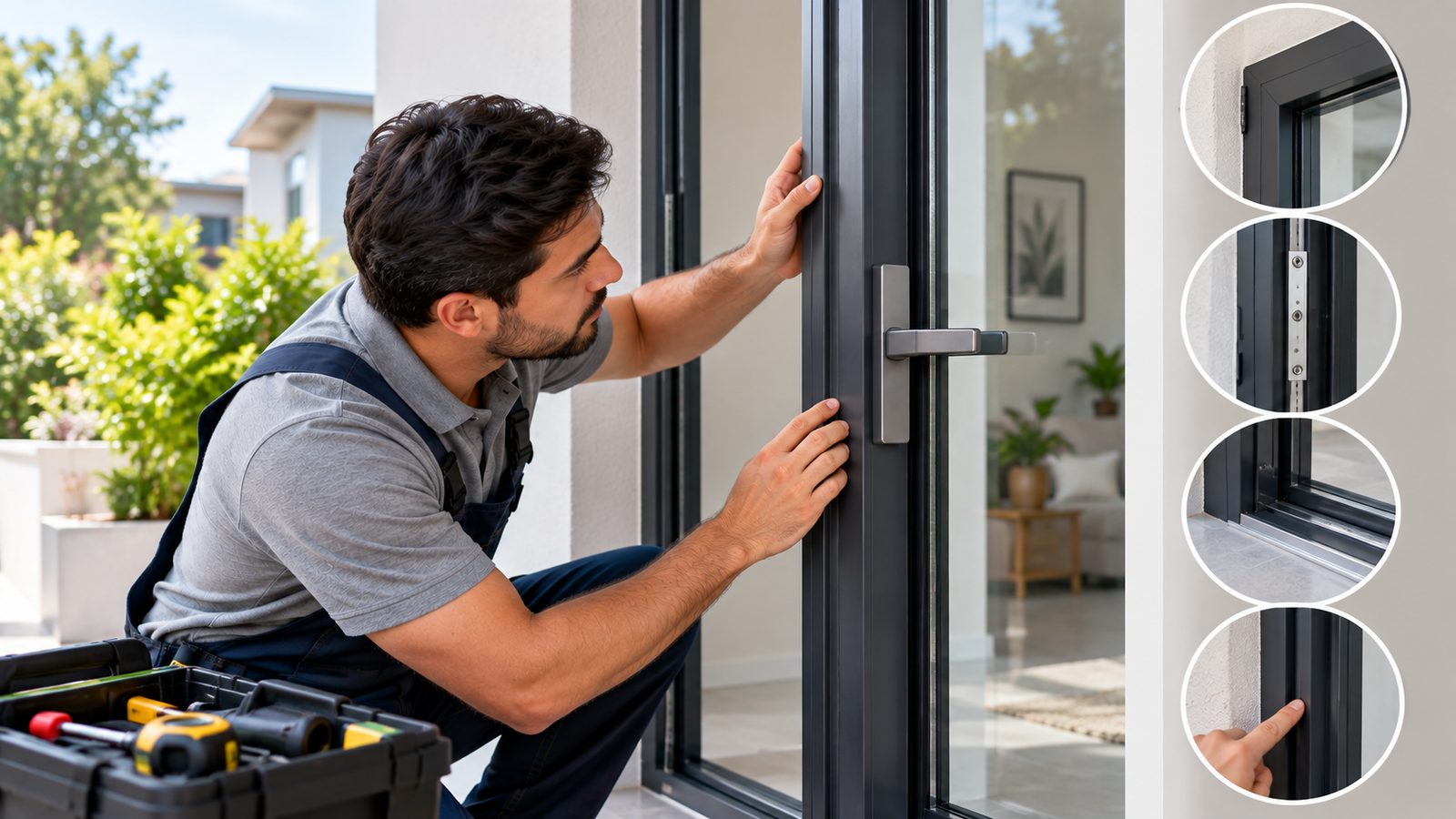
Begin with the inspection of the whole frame.
Inspect:
- Sideways of the frame
- The top part of the frame
- Bottom part or the threshold
- Corners of the frame
- Screws
- Anchors
- Hinges
- Lock area
- Sealant
- Surrounding wall of the frame
Move the door open and closed slowly to pinpoint where the problem lies.
Do not try to straighten the frame if it is already cracked or severely bent.
Step 2: Check the Door Opening
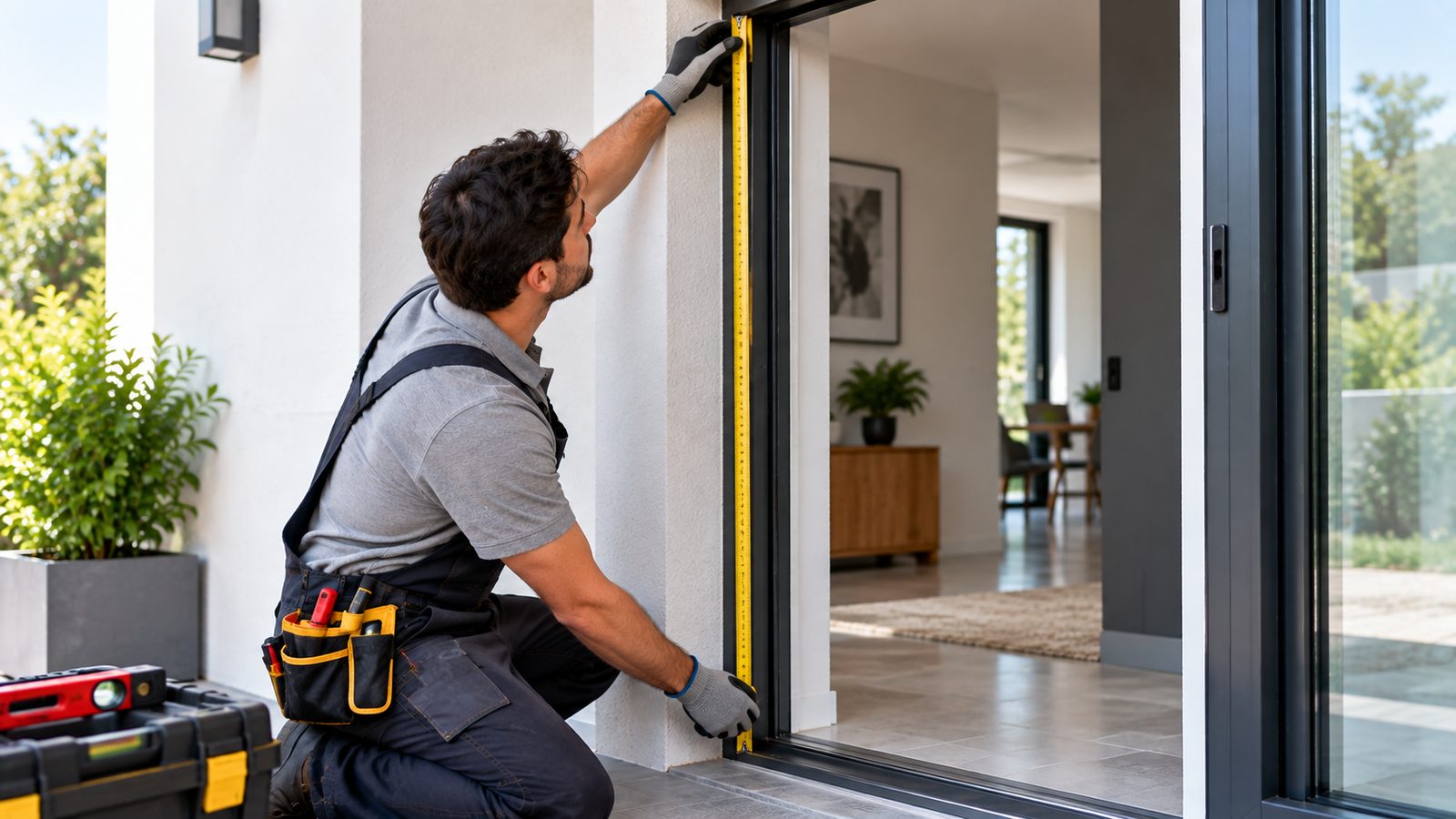
If the entire frame must be refixed, start by checking the wall opening.
Remove any loose particles, dust, old sealant, and debris surrounding the frame.
The surface must have sufficient strength to accommodate the anchors.
Damaged parts of the wall around the opening should be fixed before the frame is refixed.
According to Corinzo, the wall opening should be prepared by cleaning it of any dirt and debris before installation of the aluminum frame.
Step 3: Check the Frame Alignment
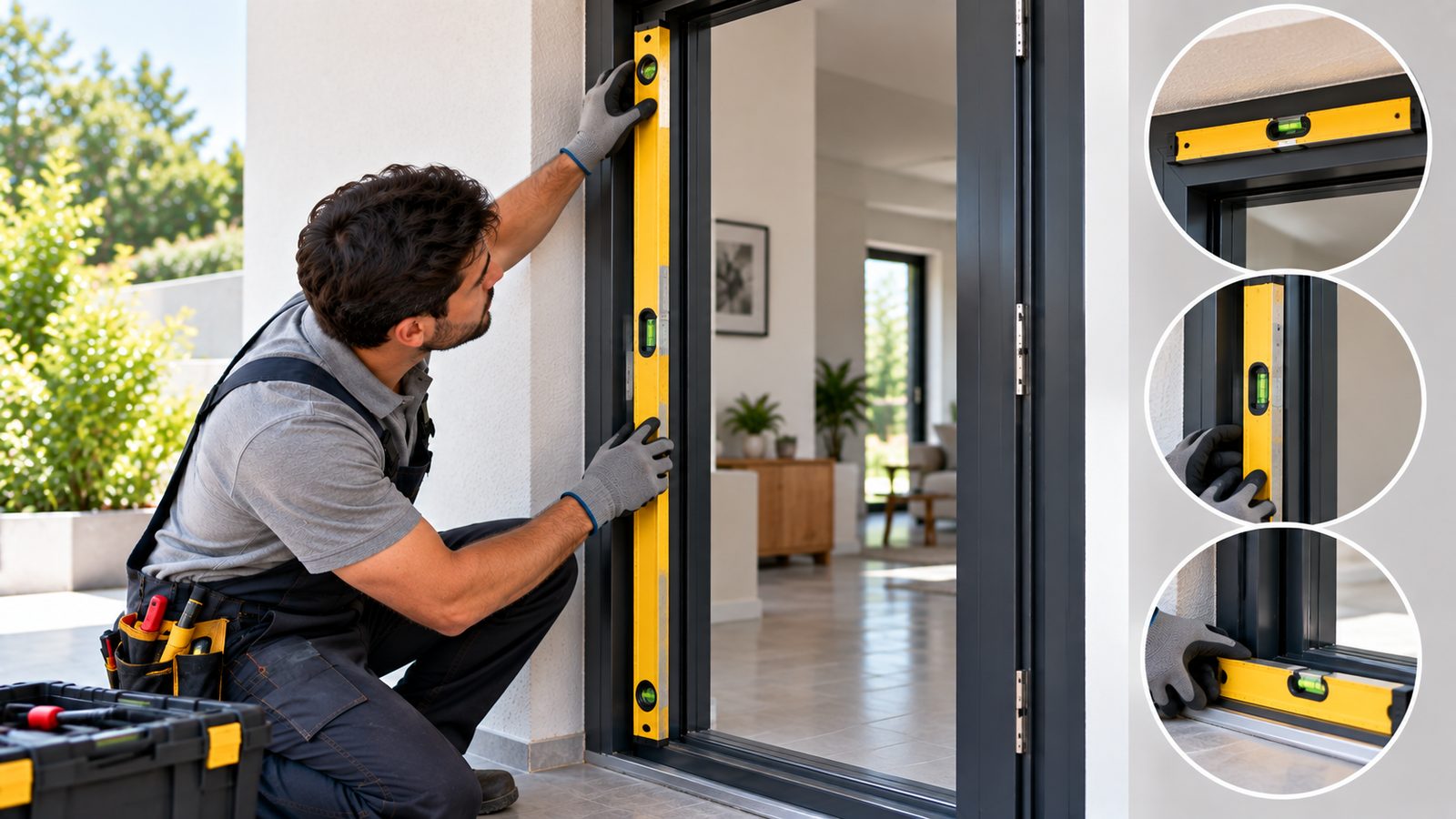
Use a spirit level to make sure that the frame is:
- Horizontal at the top
- Vertical on both sides
- In its correct position within the frame opening
- Squared in all corners
It is very important to do this.
The aluminium frame may be in its proper position but not squared. Even slight misalignment will affect the movement and even the locking of the door.
If the frame is loose, use suitable wedges to secure it for making the necessary checks.
Step 4: Tighten or Replace Loose Fixings
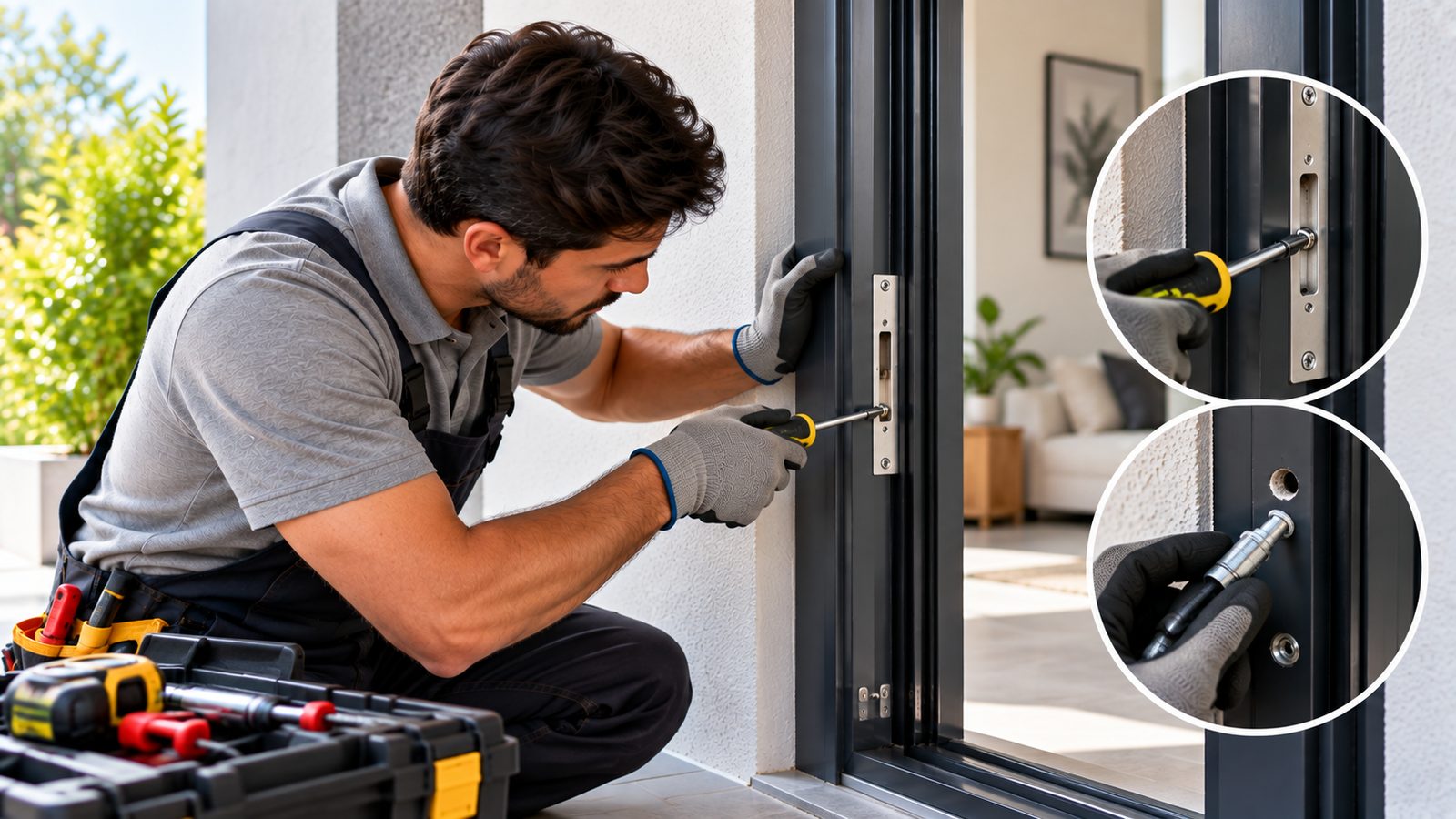
If the frame just happens to loosen up, then look into the screws and anchors that have been used.
Loose screws can be tightened, while loose anchors may need to be changed for proper fitting into the wall.
It is important not to tighten the screws too much. Excessive tightening might cause damage to the aluminum profile or the entire frame.
If one is installing a frame, fixing points have to be spread evenly around the frame and not just few.
The instructions from Corinzo advise on fixing the frame with screws and anchors while constantly checking the frame with a spirit level.
Step 5: Reposition a Misaligned Frame
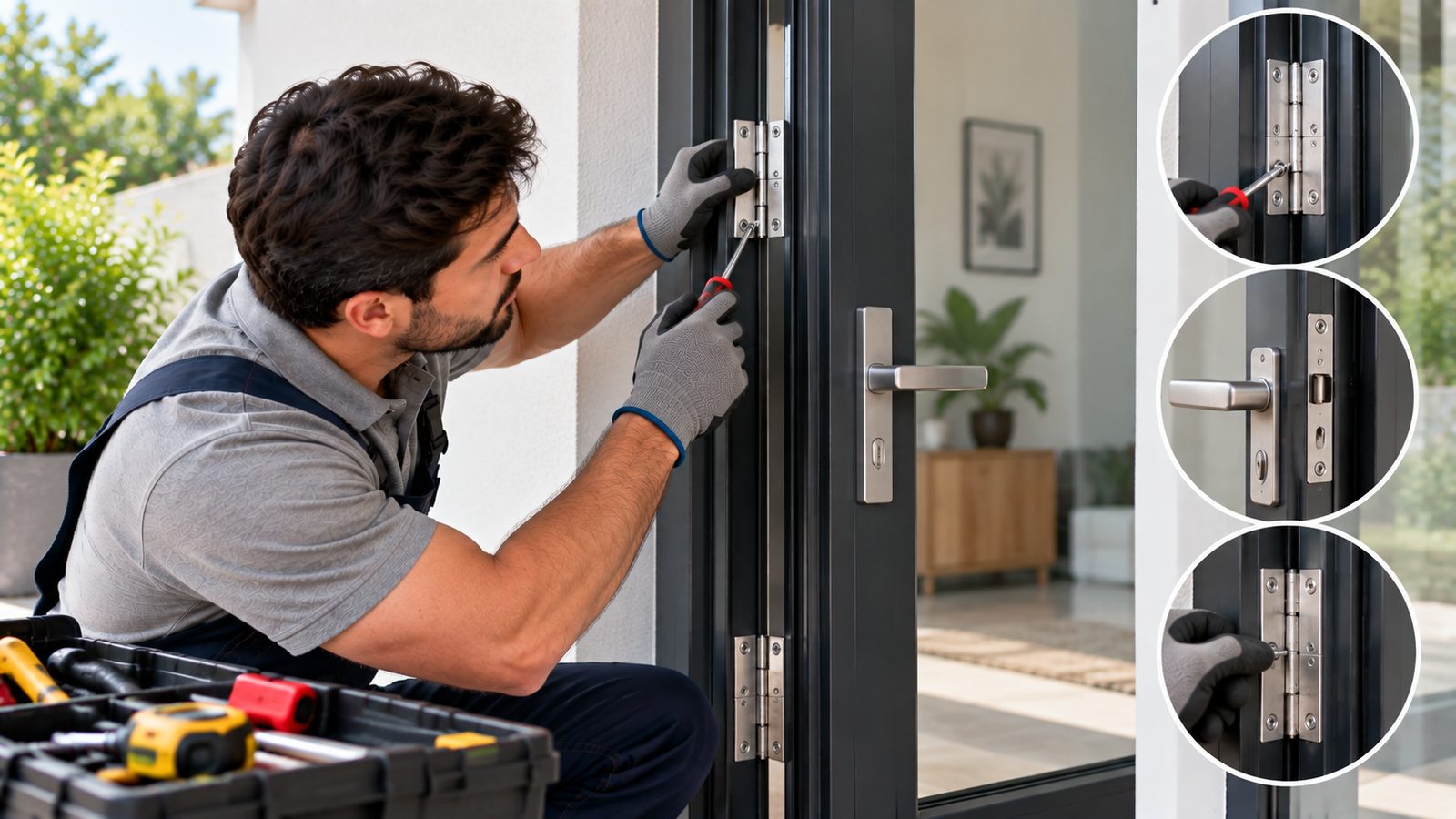
If tightening the bolts does not solve the issue, then the frame itself may have to be moved back into place.
First loosen the appropriate bolts to the extent that allows you to move the frame into proper alignment.
Aligning the frame in different positions:
Vertical position: The frame should be vertical on both sides.
Horizontal position: The top side of the picture frame should be aligned horizontally.
Square: Both the diagonals should be close in measurements.
Once the picture frame is aligned properly, fix it.
There could be situations where there might be a need to remove the picture frame because of its improper alignment.
Step 6: Check the Door Hinges and Hardware
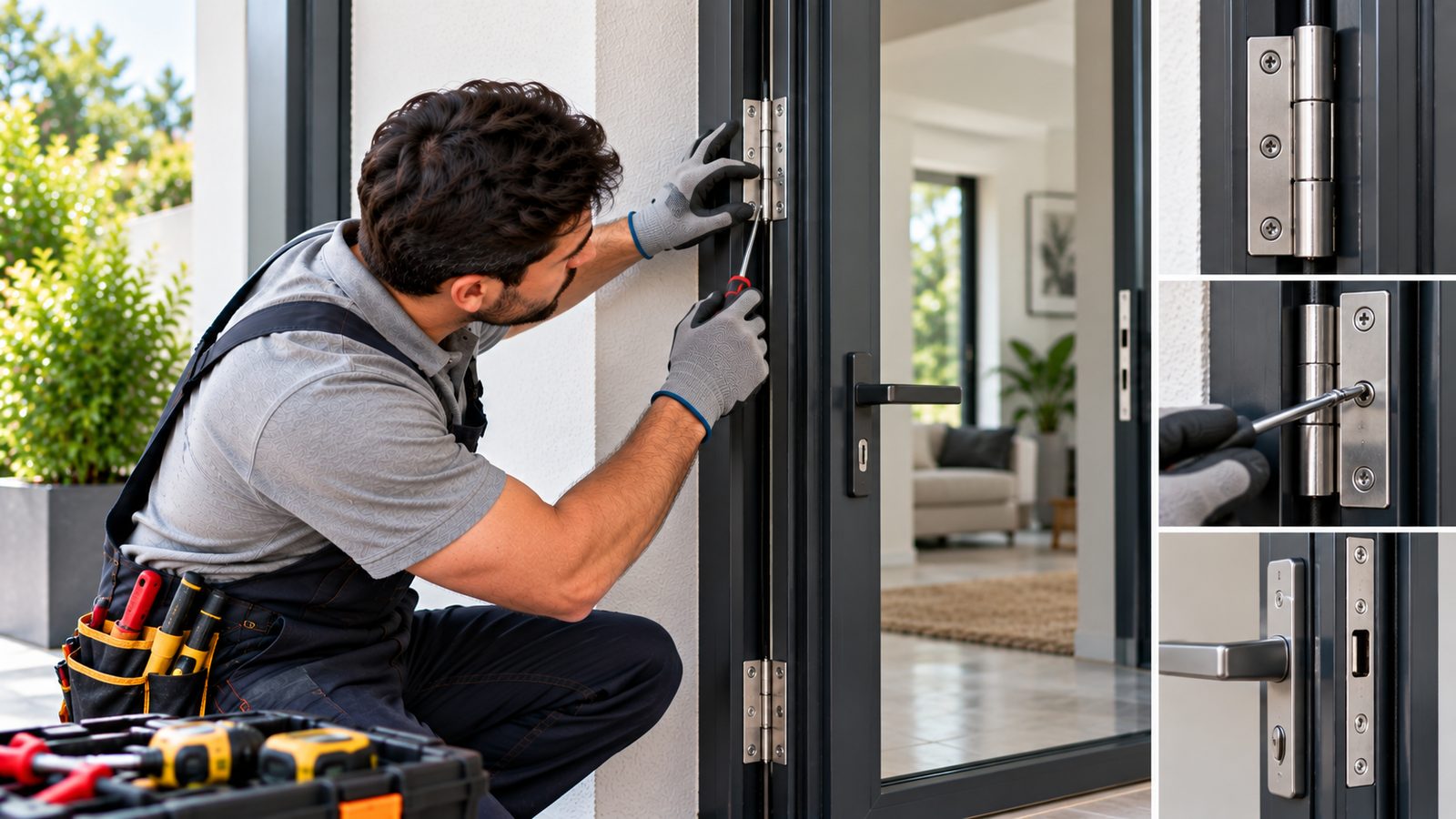
Sometimes, there could be instances where the frame is in good condition, but it is the door hardware that causes the problem.
Consider:
- Hinges
- Screws
- Handles
- Locks
- Rollers, if necessary
- Latches
If you have a door that is sagging, chances are that its hinges require adjustment or replacement.
In the case of an aluminum sliding door system, the rollers and tracks should be checked rather than the hinges.
The Corinzo range of aluminum door systems has various models, including the sliding door, casement, folding, French, invisible and partition doors.
Step 7: Fix Gaps Around the Aluminium Frame
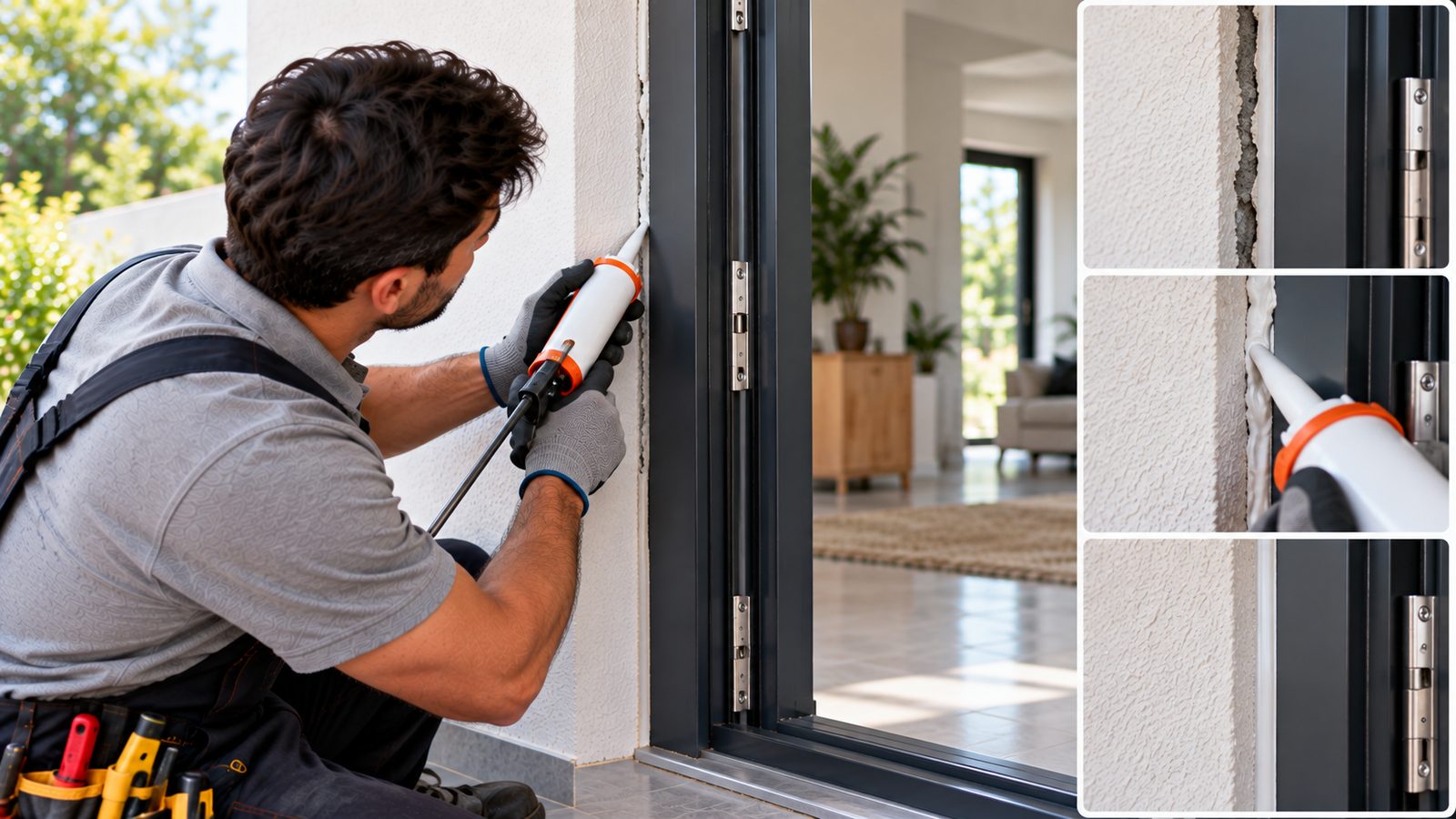
Once the frame is properly aligned and fastened in place, check the space between the aluminium frame and the wall.
Construction spaces can normally be filled using an appropriate sealant.
Preparations before sealing include:
- Removing any dirt.
- Making sure the surface is ready for the sealant.
- Applying the sealant in a continuous bead on the joint.
- Working the sealant according to the manufacturer’s directions.
- Allowing enough time for curing.
The Corinzo installation manual suggests the use of silicone or construction sealant around the frame to minimize any leaks from air, water, and dust.
Sealant should not be used as a means of structural fixation of the frame.
Step 8: Check the Door Operation
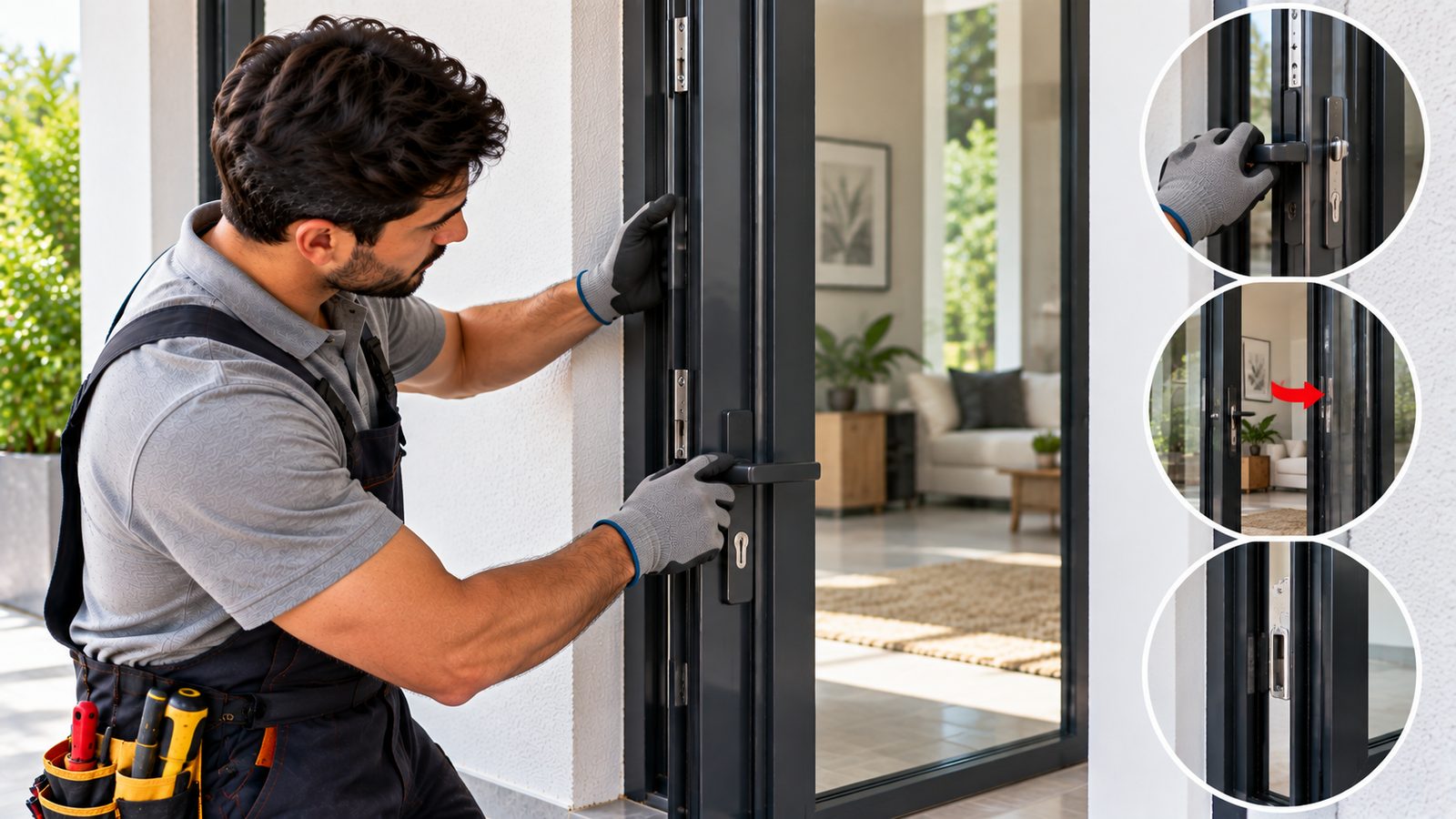
The door must:
- Operate smoothly
- Close without rubbing
- Latch securely
- Keep the same space
- Not move too much
- Not make any unusual noise
If the door is a sliding door, ensure that it slides easily on the track.
If the door is a hinged door, inspect the hinges and the locking mechanism.
If after repairing the frame, the door still makes friction, then there could be an issue with the shutter of the door, the hinges, the hardware, or the frame itself.
Step 9: Check the Weather Sealing
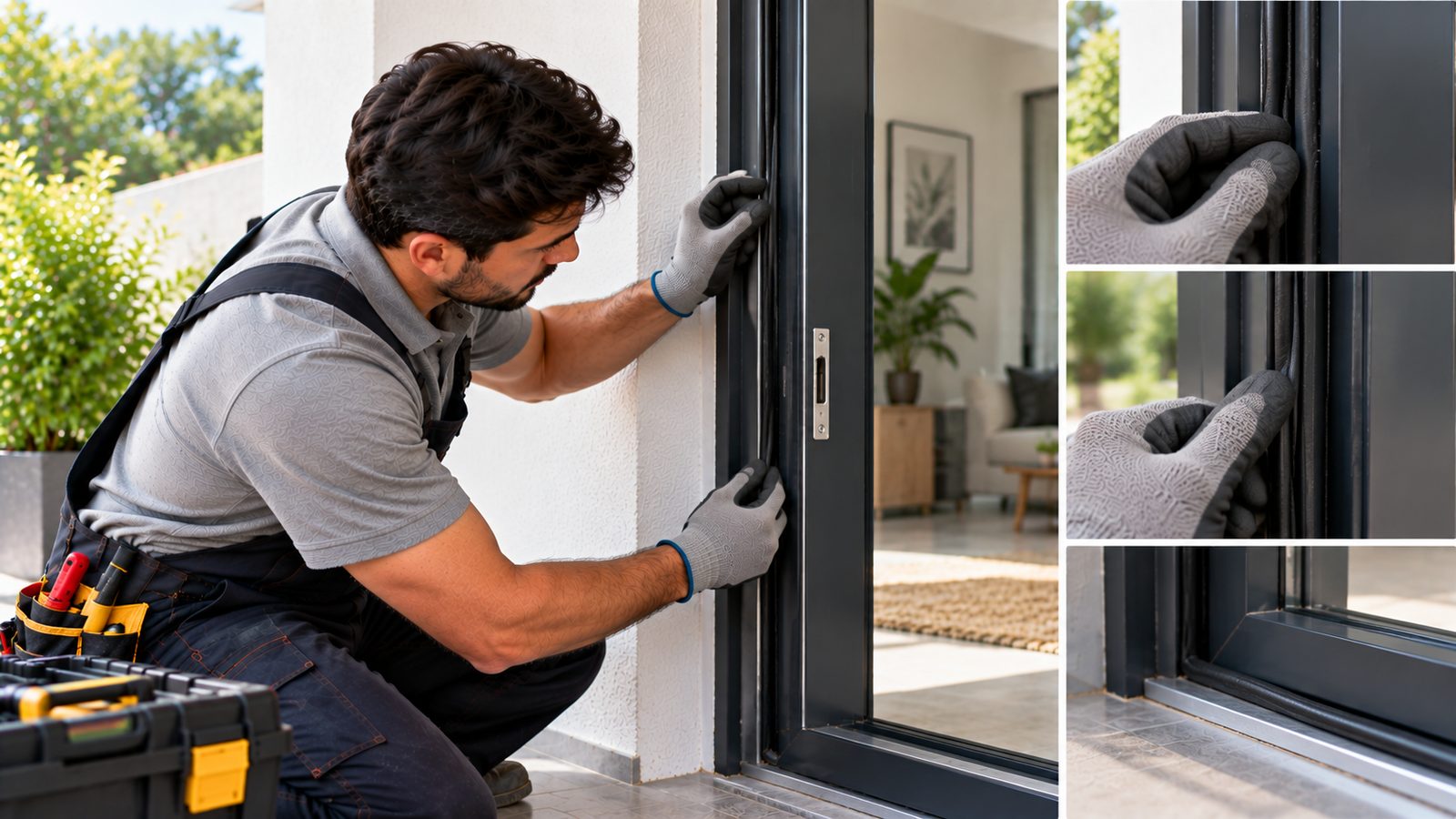
In case of an exterior aluminium door, examine the sealing around the perimeter after installing the frame.
Some things to check include:
- Gaps
- Cracks on sealant
- Absence of gasket
- Loose weather stripping
- Open joints
It is very crucial that you properly seal your external doors since the frame can easily allow the passage of water and air without sealing.
The Corinzo Aluminium Door Frame Manufacturing Instructions also mention rubber gaskets, weather stripping, and silicone sealant as sealing materials.
How to Fix a Loose Aluminium Door Frame
If your main problem is a loose aluminium door frame, follow this basic sequence:
First
Pinpoint the movement of the frame.
Second
Evaluate the condition of the existing screws and anchors.
Third
Inspect the condition of the wall material where the wall mount is to be done.
Fourth
Where required, modify the existing or damaged fastenings.
Fifth
Apply a spirit level to check that the frame is in its right position as you tighten it.
Finally
Seal appropriate joints when the frame has been fixed.
If there is a problem with the wall itself or if the frame has moved quite a bit, it would be wiser to let a professional installer evaluate the situation.
How to Fix an Aluminium Door That Is Not Closing Properly
A door that does not close properly does not always mean that the frame needs replacement.
Check these areas first:
Check the Frame
Ensure that the frame is both level and plumb.
Check the Hinges
Any loose or worn-out hinges will influence the position of the door.
Check the Latch
The latch should be properly engaging the strike plate.
Check for Obstructions
An obstruction can be in the form of dust, debris, a malfunctioning seal, or any other object that prevents closure.
Check the Door Shutter
A warping door shutter should be checked for any adjustment or replacement.
If the door remains difficult to close after these checks, a professional should inspect the frame and hardware.
How to Fix Water Leakage Around an Aluminium Door Frame
Leaking should be investigated, and not instantly sealed with the sealant.
Look at:
- Perimeter sealant.
- Frame-to-wall junction.
- Rubber gaskets.
- Seals on the door panels.
- Threshold and drain.
- Wall cracks close by.
Exterior surface surrounding the opening.
If the leaking results from some construction issue, using an additional sealant is likely to serve as a temporary remedy.
According to Corinzo’s manufacturing guide for aluminium door frames, gaskets and sealants keep the water, dust, and air out of the joints in the door frame.
How to Fix a Sliding Aluminium Door Frame
Sliding doors need a slight difference in treatment.
Check the following items:
- Alignment of top and bottom frames
- The sliding rails
- The rollers
- Panel alignment
- Locking mechanism
- Weather seals
If the frame itself is not level, then the sliding door panel will become hard to slide.
Corinzo’s guide for installing sliding aluminium doors suggests using shims to keep the frame in place while checking for levels, then fixing the frame using proper screws and anchors.
Homeowners opting for replacement instead of repair should look at the range of Corinzo’s Aluminium Sliding Doors.
Common Mistakes to Avoid
Using Too Many Screws Without Checking Alignment
Using too many screws won’t solve an out-of-square frame problem.
Overtightening Fixings
Excessively tightening the fasteners can lead to damaging or distorting the aluminium profile.
Using Sealant Instead of Mechanical Fixing
Sealing compound should serve the purpose of sealing the joint and not fixing it structurally.
Ignoring the Wall Condition
The strength of the frame cannot hold it together on walls which are in poor condition.
Choosing the Wrong Hardware
Hinges, locking mechanisms, rollers, fixings, and other hardware should be suitable for use with the door.
Trying to Straighten a Severely Bent Frame
A very bent aluminium profile might have to be replaced instead of trying to bend it straight.
When Should You Call a Professional?
Professional installers must be brought in if:
- Aluminium frames are heavily distorted.
- Opening in the wall is damaged.
- Door is big and heavy.
- There are glass panels.
- Aluminium frame has become detached from the structure.
- Door can’t be leveled through adjustment.
- Water leakage persists after sealing.
- Structure needs to be reinforced.
Larger aluminium doors need reinforcement depending on their sizes and weights. According to the manufacturing guidelines by Corinzo, galvanized steel reinforcement is added inside the aluminium profiles for larger doors and heavy glass panels to prevent sagging.
Why Proper Aluminium Door Frame Installation Matters
An adequately installed frame serves as the basis for efficient door function.
Proper installation will help with:
- Alignment of the door
- Efficient functioning of the door
- Lock mechanism operation
- Structural stability of the frame
- Sealing out weather
- Maintenance in the long run
The installation guide by Corinzo stresses the importance of measuring correctly, preparing the opening, installing the frame correctly, securing the frame, sealing, and eventually testing the door.
In case your frame needs replacement, it will be worthwhile to ensure that the old opening suits the new door system.
Aluminium Door Frame Options for Modern Homes
Aluminium frames can be used for several types of doors.
Sliding Doors
Useful when space-saving operation is needed horizontally.
Casement Doors
Used in case of hinged operation system.
Folding Doors
Needed in case of wide openings and folding of multiple panels.
French Doors
The classic two-panel system with modern aluminium frame choice.
Invisible Doors
Used in case of flush system.
Partition Doors
Needed to separate interior spaces.
As per the Aluminium Door Frame guide by Corinzo, sliding, casement, folding, French, invisible, and partition doors are some of the common aluminium door frames.
You may also browse Aluminium Doors by Corinzo.
Frequently Asked Questions
1.How to tighten a loose aluminium door frame?
Find out what is causing the looseness. Check the screws and anchors, the state of the wall and the placement of the frame. Change the fasteners that are not right or are broken, align the frame and attach it correctly.
2.Why does my aluminium door frame shift?
This can happen due to many reasons, such as loose anchoring, wall conditions, improper installation, etc.
3.Can a deformed aluminium door frame be fixed?
Sometimes, minor deformation can be fixed, however, in some cases, the frame will need to be replaced.
4.What might be some of the possible causes of the bad closing of my aluminum door?
These might be the misalignment of the frames, hinge problems, improper installation of latches, or even dirt and other impediments.
5.How can I prevent water from leaking through my aluminium door frame?
You should look at the frame-wall junction, the sealing compound, gaskets, threshold, drainage and the wall around the door.
Repair the actual cause of leakage and then apply new sealant.
6.Can I fix my aluminium door frame myself?
Some jobs such as checking for loose screws, cleaning the joints, and alignment check may be easy. But complete installation of the frame, re-alignment of the frame, and large glass doors need professional help.
The first step in fixing an aluminum door frame is understanding the problem. Some of the causes of problems in door frames include loose frames, misalignment, faulty fixings, worn-out hardware, and water leakage.
Generally, the process involved in fixing an aluminum door frame includes examining the opening, ensuring proper alignment of the frame, fitting in proper fixings, examining the door hardware, and sealing the necessary joints. This is especially critical for aluminum doors as the frame must be square and level for the door to function properly.
Where serious fixing is required, large or heavy doors, and glass systems, or where there are faulty wall openings, professional installation is advisable. Corinzo offers aluminum door systems, which include Aluminum Sliding Doors, folding doors, casement doors, French doors, invisible doors, among others.
Related Post:
How to Make Aluminium Sliding Doors